Design ideas
Master bedroom design ideas for Singapore homes: layout, storage, light and sleep
Design the master bedroom around sleep first: a dark, quiet, cool room with the bed placed for easy circulation, storage that hides clutter, and layered lighting. Platform beds and ceiling fans in HDB flats have rules worth knowing.
 Rayden Nyoe4 min read
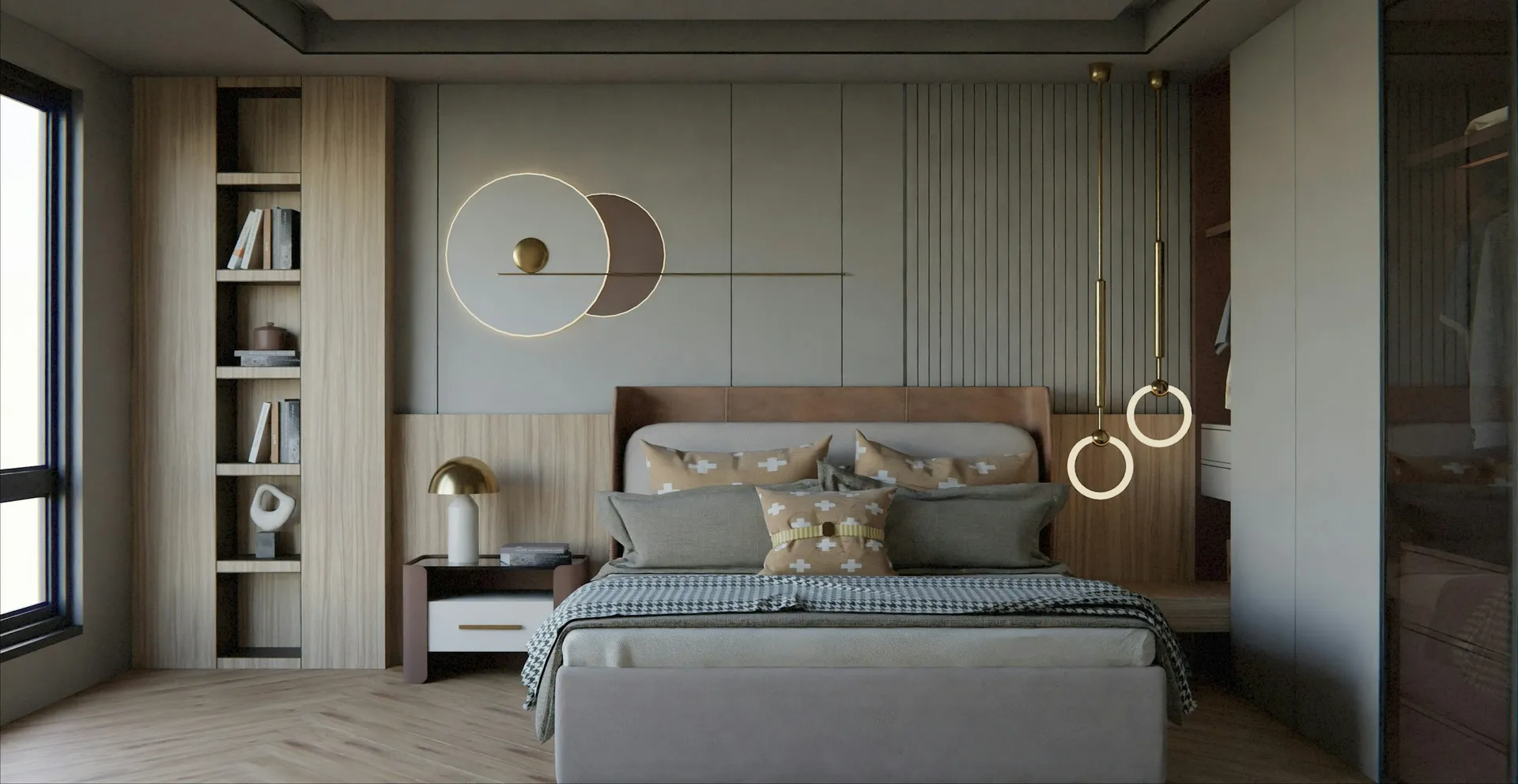
Short answer: design the master bedroom around sleep. HealthHub advises keeping the bedroom quiet, dark, well ventilated and at a comfortable temperature, and keeping the bed for sleep rather than work. Place the bed so both sides are easy to reach, put storage where it hides clutter, layer the lighting, and check HDB's rules before building platforms or hanging a ceiling fan.
Start with the bed
The bed is the largest object in the room, so its position decides everything else.
- Headboard against a solid wall, not under a window, so you are not dealing with sun, rain and drafts at your head.
- Access on both sides for couples, so no one climbs over the other. Leave enough clearance for bedside tables and to walk past comfortably.
- Clear path to the door and wardrobe. Check that wardrobe doors and drawers can open fully with the bed in place.
- Choose the bed size last, after you have tested the circulation on a plan. A king bed in a compact HDB master bedroom can leave little else.
See beds and platforms for frame and platform options.
Platform beds: HDB rules
Platform beds are popular in Singapore because they add storage and a clean, low look. If you are in an HDB flat, HDB's guidelines for hardwood platforms say:
- No permit is needed.
- The recommended room height is at least 2.4m.
- The void between timber joists beneath the platform must not be sealed with cement or other materials.
- No storage is allowed in the void within the platform and floor, and the sides of the platform must be sealed.
- A safety barrier height of at least 1m must be kept from the top of the platform to the window sill or parapet.
That last point catches people out: a high platform next to a low window can break the rule. If you want storage under the bed, discuss with your designer how to provide it within HDB's conditions, for example with drawers in a freestanding bed frame instead.
Wardrobes and storage
Most master bedrooms need a full wall of storage. The main decisions:
- Built-in or freestanding. Built-ins use space to the ceiling, freestanding pieces move with you. Our built-in vs freestanding wardrobe guide compares them.
- Swing or sliding doors. Sliding doors suit tight rooms where swing doors would hit the bed.
- Inside the wardrobe: more hanging space for shirts and dresses, drawers for folded clothes, a high shelf for luggage.
Compare options on our wardrobes page, and for more ideas see storage ideas for small homes.
Make it dark and quiet
HealthHub suggests blocking out distracting noise and light for better sleep. In practice:
- Blackout lining on curtains, or blackout blinds, for bedrooms facing street lights or morning sun.
- Fabric in the room (curtains, rug, upholstered headboard) to soften sound.
- No bright standby lights facing the bed. Plan where the TV, router and chargers sit.
Keep it cool without overcooling
HealthHub notes that a room that is too hot or too cold can keep you awake, and that a cool room is often best for sleep. Singapore's Ministry of Sustainability and the Environment recommends setting air-conditioning to 25°C or higher, noting each degree higher saves about 10% of the energy used. A ceiling fan helps circulate cool air.
If you add a ceiling fan in an HDB flat, HDB's conditions include:
- the fan should weigh no more than 6kg;
- at least 2.4m clear height from the finished floor to the fan blades; and
- expanding bolts no more than 8mm in diameter, penetrating no more than 40mm.
Place the air-conditioner so the airflow does not blow straight onto the bed. Our aircon systems page compares options.
Layer the lighting
- Ambient: downlights or cove lighting for general use, on a dimmer if possible.
- Bedside: wall lights or lamps on both sides, with switches you can reach from bed.
- Wardrobe: strip lights inside tall wardrobes, so you can see clothes clearly.
- Warm colour temperature for a restful feel.
If you add a false ceiling for cove lighting, HDB requires a minimum clearance of 2.4m from the finished floor. See our home lighting design guide and the false ceilings page.
Plan power points around the bed
- A double point on each side for phones, lamps and devices.
- A point for the TV if you want one in the bedroom, though HealthHub suggests avoiding stimulating screen use if you cannot sleep.
- A point near the dressing table for a hairdryer.
Choosing a style
Restful styles tend to share muted colours, natural materials and little visible clutter:
- Japanese and Muji: low beds, timber, linen and hidden storage.
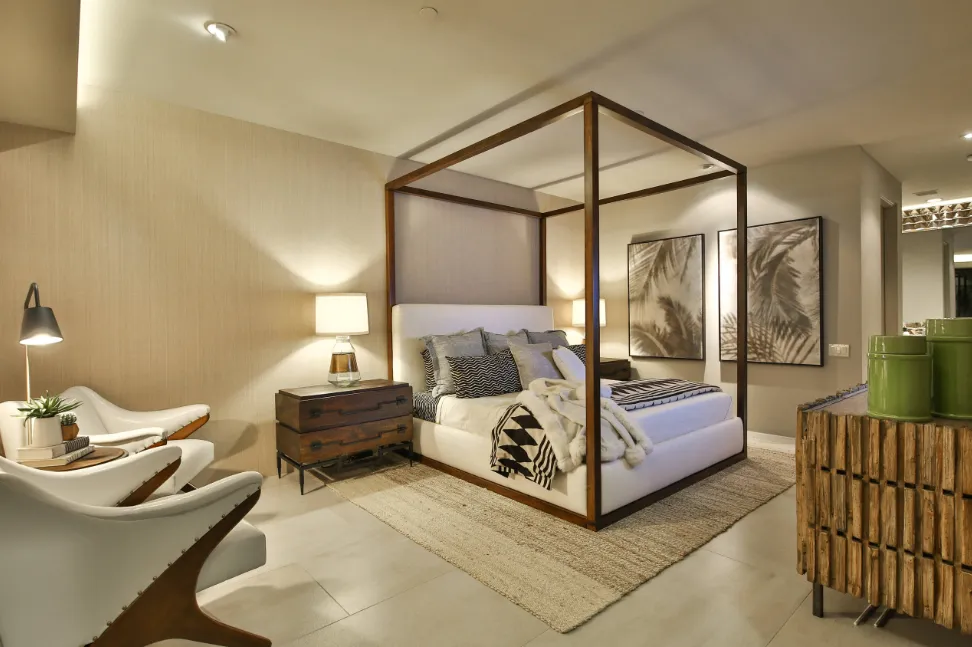
- Resort style: warm timber, rattan and a hotel-like calm.
- Boutique and hotel concept: upholstered headboards, layered lighting and tailored joinery.
Master bedroom checklist
- Bed position tested on a plan with clearance on both sides
- Wardrobe doors and drawers clear the bed
- Platform within HDB's rules (no storage in the void, 1m barrier to window)
- Blackout curtains or blinds
- Aircon placed so it does not blow on the bed
- Bedside lights and switches within reach
- Power points on both sides of the bed
How JIAHOME helps
We test your bedroom layout in 2D and show it in 3D, so you can see the bed, wardrobe and lighting together before building. See our services or packages.
FAQ
Frequently asked questions
Can I have storage under a platform bed in an HDB flat?
HDB guidelines for hardwood platforms say no storage is allowed in the void within the platform and floor, and the sides must be sealed. A freestanding bed frame with drawers is one alternative.
What temperature should the bedroom aircon be set to?
Singapore's Ministry of Sustainability and the Environment recommends 25°C or higher, with each degree higher saving about 10% of energy. HealthHub notes that a cool, comfortable room helps sleep.
Can I install a ceiling fan in my HDB bedroom?
Yes, without a permit, if the fan weighs no more than 6kg, there is at least 2.4m clearance from the floor to the blades, and the fixing bolts meet HDB's size limits.
Should the bed go under the window?
It is usually better against a solid wall, away from sun, rain and drafts. In HDB flats, a raised platform near a window must also keep a 1m safety barrier height to the sill.
Find your style