Flooring is one of the few finishes you touch every day, and one of the hardest to change once carpentry is built on top of it. In Singapore the decision usually comes down to three questions: can it go over the existing floor, how will it cope with humidity and mopping, and does it need an HDB permit?
For most BTO and resale HDB owners the shortlist is vinyl (rigid SPC planks or thinner glue-down LVT), porcelain or homogeneous tiles, laminate, and engineered wood. Condo and landed owners see more marble, large-format porcelain and timber. Terrazzo, microcement and epoxy are design-led choices for a particular look.
The biggest cost swing is not the material itself but whether the old floor has to be hacked. SmartCalculator estimates hacking and disposal at about $3 to $8 psf plus $1 to $3 psf for screeding, which floating floors such as vinyl and laminate avoid.
Below, every realistic option is compared with honest pros and cons, followed by a buying guide covering HDB rules, overlay versus hacking, and the questions to ask before you sign. For wall and bathroom tiles, see our separate guide to tiles.
Flooring options at a glance
| Option | Cost | Durability | Upkeep | Best for |
|---|---|---|---|---|
| SPC vinyl (rigid core click planks) | Budget | good | low | Overlaying existing tiles in BTO and resale HDB bedrooms and living rooms |
| LVT and dry-back (glue-down) vinyl | Budget | good | low | Level, smooth subfloors where floor height matters, such as kitchens that meet tiled areas |
| Laminate | Budget | good | medium | Bedrooms and study rooms where you want a hard, scratch-resistant wood look |
| Engineered wood | Upper | good | medium | Living rooms and bedrooms in condos and HDB flats where you want real wood |
| Solid timber planks | Premium | good | high | Landed homes and condos where the owner accepts timber upkeep |
| Parquet (timber strips and blocks) | Upper | good | high | Restoring original floors in resale HDB flats, or herringbone feature floors |
| Homogeneous and porcelain tiles | Mid-range | excellent | low | Kitchens, bathrooms, service yards and whole-home floors in resale flats being redone |
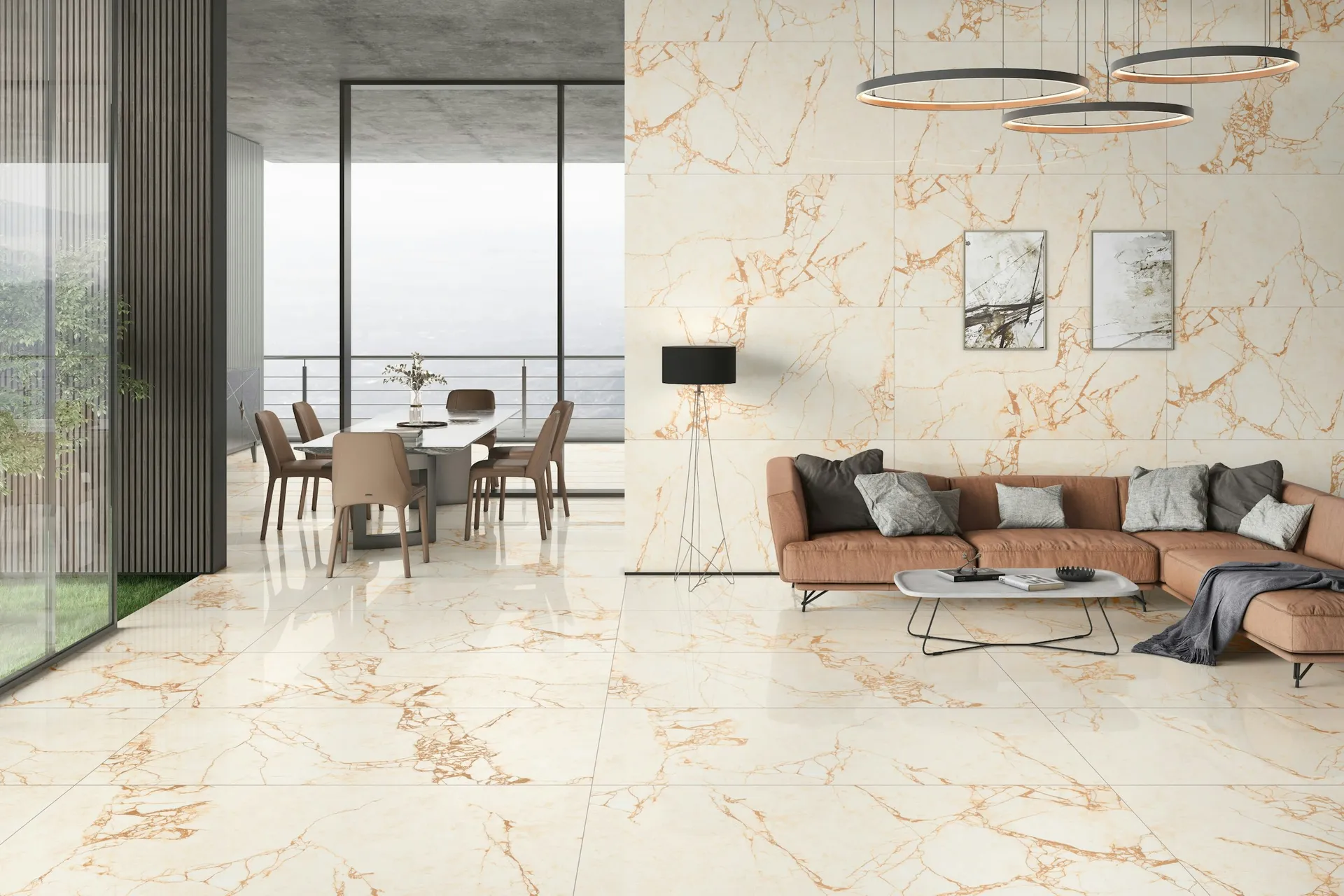
| Marble and natural stone | Premium | good | high | Living and dining areas in condos and landed homes with a premium budget |
| Terrazzo | Premium | excellent | medium | Feature floors in retro or contemporary homes, and restoring older terrazzo |
| Microcement (and cement screed finishes) | Upper | good | medium | Seamless industrial or minimalist floors in living areas and dry kitchens |
| Epoxy and resin flooring | Mid-range | good | low | Seamless industrial looks, home studios, store rooms and landed-home garages |
Cost is relative within flooring ($ budget to $$$$ premium). Actual prices depend on brand, size and workmanship, so compare itemised quotes.
SPC vinyl (rigid core click planks)
- Budget Budget
- Durability: good
- Upkeep: low
Stone plastic composite (SPC) planks have a rigid mineral and PVC core with a printed wood or stone layer and a clear wear layer on top. They click together and float over the existing floor, which makes them the default overlay choice for HDB bedrooms and living areas.
Best for: Overlaying existing tiles in BTO and resale HDB bedrooms and living rooms
Pros
- Floats over existing tiles, so no hacking, little dust and a short install
- Water resistant surface that copes with mopping and spills
- Rigid core hides small unevenness better than thin vinyl
- Warmer and softer underfoot than tiles
- Damaged planks can often be replaced individually
Cons
- Raises the floor, so doors may need trimming and thresholds need transition strips
- Standing water at joints or edges can still seep underneath
- Wear layer can scratch from grit and dragged furniture
- Can sound hollow or clicky if the subfloor is uneven or underlay is skipped
SmartCalculator estimates installed vinyl and SPC at about $4 to $10 psf in 2026 (supply about $2.50 to $6, laying about $2 to $4). Qanvast puts vinyl material at about $4 to $8 psf in 2025.
HDB lists laying of vinyl finishes, carpet or linoleum as work that needs no permit, which is a large part of SPC's popularity in new flats. Before laying, ask the installer to tap for hollow or loose tiles and fix them first, because a floating floor will not hold down a popping tile underneath.
When comparing quotes, check total thickness, wear layer thickness, whether an attached acoustic underlay is included, skirting, and how door trimming and edge profiles are priced. Keep vinyl out of showers and areas where water pools, and wipe up spills near kitchen sinks and washing machines.
LVT and dry-back (glue-down) vinyl
- Budget Budget
- Durability: good
- Upkeep: low
Luxury vinyl tiles and planks that are glued to a smooth, level base instead of clicking together. Thinner than SPC, so they barely raise the floor, but they need very good surface preparation.
Best for: Level, smooth subfloors where floor height matters, such as kitchens that meet tiled areas
Pros
- Very thin build-up, so doors and thresholds are less affected
- Glued down, so it feels solid and quiet underfoot
- Wide range of wood, stone and patterned designs
- Individual tiles or planks can be lifted and replaced
Cons
- Any bump, grout line or crack in the base can show through over time
- Usually needs a levelling compound or skim coat first, which adds cost and time
- Adhesive quality and site humidity affect how well it bonds
- Harder to remove later than a floating floor
Glue-down vinyl is less common in HDB flats than SPC because most homeowners overlay existing tiles, and tile grout lines tend to "telegraph" through thin vinyl. It works best over a smooth screed, an existing smooth floor, or after the installer applies a levelling layer.
Ask the installer what preparation is included, which adhesive is used, and how they deal with moisture in the base. Glue-down vinyl is also useful where you want the new floor to sit nearly flush with an adjacent tiled area.
For pricing, SmartCalculator groups LVT with vinyl at about $4 to $10 psf installed (2026 estimate), but surface preparation is often a separate line, so read quotes carefully.
Laminate
- Budget Budget
- Durability: good
- Upkeep: medium
A high-density fibreboard core with a printed decor layer and a hard melamine top coat, laid as click planks over an underlay. Good scratch resistance at a budget price, but less tolerant of water than vinyl.
Best for: Bedrooms and study rooms where you want a hard, scratch-resistant wood look
Pros
- Hard wearing top surface that resists scratches well
- Floats over existing floors without hacking
- Realistic wood-look designs at budget to mid-range prices
- Feels firmer underfoot than most vinyl
Cons
- Fibreboard core can swell permanently if water sits at the joints
- Not suitable for bathrooms, wet kitchens or near washing machines
- Can sound louder and more hollow than vinyl without a good underlay
- Cannot be sanded or refinished
SmartCalculator estimates installed laminate at about $5 to $12 psf in 2026. Stacked Homes notes laminate is less moisture resistant than vinyl and is not recommended for bathrooms or heavy-use kitchens.
HDB's guidelines group laminated and bamboo flooring with parquet and timber flooring. Laying it over existing finishes needs no permit, as long as the work does not raise the floor as a platform, use cement screed, or hack the existing finishes.
When choosing, ask for the abrasion class (AC) rating and whether the product has water-resistant or sealed edges. Mop with a well-wrung mop rather than a wet one, and keep it away from aircon condensation drips and balcony doors.
Engineered wood
- Upper Upper
- Durability: good
- Upkeep: medium
A real timber top layer bonded to a plywood or multi-layer core. You get genuine wood grain and warmth with better stability than solid timber, which matters in Singapore humidity.
Best for: Living rooms and bedrooms in condos and HDB flats where you want real wood
Pros
- Real wood surface with natural grain and feel
- Cross-layered core moves less with humidity than solid planks
- Can be floated or glued over existing floors in many cases
- Thicker top layers can be lightly sanded and refinished
Cons
- Softer than laminate or tiles, so it dents and scratches
- Water and prolonged damp still cause staining and lifting
- Thin top layers allow limited or no sanding
- Plywood cores can be attacked by termites in some locations
SmartCalculator estimates engineered wood at about $10 to $18 psf installed in 2026, and parquet-type timber flooring more broadly at $12 to $40 psf.
The thickness of the real wood layer decides how many times it can be sanded, so ask for it in millimetres, along with the species, the core construction and the finish (lacquer or oil).
HDB's care guide for timber floors applies here too: avoid excessive dampness, put a mat outside bathrooms, dry the floor after mopping, ventilate rooms and use soft pads under furniture. Prolonged sunlight can also discolour timber, so consider blinds on west-facing windows. Ask the supplier about termite treatment if your unit is low-floor or near greenery.
Solid timber planks
- Premium Premium
- Durability: good
- Upkeep: high
Planks cut from a single piece of hardwood. The most natural look and feel, and the most sensitive to Singapore humidity and moisture, so it needs an experienced installer.
Best for: Landed homes and condos where the owner accepts timber upkeep
Pros
- Authentic look and feel that ages with character
- Can be sanded and refinished several times over its life
- Durable species can last decades with care
- Adds value in premium homes
Cons
- Expands and shrinks with humidity, which can cause gaps, cupping or lifting
- Most expensive wood option, and installation takes longer
- Vulnerable to water, termites and strong sunlight
- Needs periodic re-varnishing or re-oiling
SmartCalculator estimates solid parquet and timber at about $30 to $50 psf installed (2026). In HDB flats, replacing existing floor finishes with timber needs a permit and must keep the total thickness of floor finishes and screed within 50mm.
HDB's home care guide lists the typical solid timber problems: dull varnish from wear, discolouration from water or sunlight, gaps when timber shrinks in dry conditions, and hollow or bulging strips when water seeps underneath. Its advice is to find and stop the source of water, re-varnish when needed, and replace hollow strips.
Ask the installer how long the timber will acclimatise on site, what moisture content it is supplied at, and how expansion gaps are handled at walls.
Parquet (timber strips and blocks)
- Upper Upper
- Durability: good
- Upkeep: high
Short timber strips laid in patterns such as herringbone or basketweave. Original parquet is common in older resale HDB flats, and many owners now restore it rather than cover it.
Best for: Restoring original floors in resale HDB flats, or herringbone feature floors
Pros
- Existing parquet in resale flats can often be sanded and re-varnished instead of replaced
- Patterns like herringbone suit retro, Peranakan and classic styles
- Real timber feel underfoot
- Individual strips can be replaced
Cons
- Strips loosen and pop if water gets underneath
- Needs re-varnishing every few years in busy areas
- Matching old strips during repairs can be difficult
- New herringbone installation is labour-intensive
SmartCalculator estimates parquet at about $12 to $40 psf installed in 2026, depending on species and whether it is solid or engineered.
If you are buying a resale flat with original parquet, look for loose, hollow or blackened strips (signs of past water damage) before deciding. HDB's care guide suggests sealing small gaps with matching putty and re-varnishing, and replacing hollow strips where necessary.
Wood-look herringbone is also available in SPC, laminate and engineered wood, which is easier to maintain. If you like the pattern, browse the Retro and Peranakan concepts for how it is used.
Homogeneous and porcelain tiles
- Mid-range Mid-range
- Durability: excellent
- Upkeep: low
Dense, low-absorption tiles that are the standard floor finish in Singapore kitchens, bathrooms and many living areas. Very durable and water resistant, but they usually require hacking the old floor.
Best for: Kitchens, bathrooms, service yards and whole-home floors in resale flats being redone
Pros
- Highly resistant to water, stains, heat and scratches
- Cool underfoot in tropical weather
- Huge range of sizes, colours, and stone, cement and wood looks
- Lasts for decades when laid properly
Cons
- Replacing a floor usually means hacking, an HDB permit and more noise and dust
- Grout lines need cleaning, and polished tiles can be slippery when wet
- Hard underfoot, and dropped items break more easily
- Popping or hollow tiles can occur with poor laying or thermal movement
SmartCalculator estimates ceramic and porcelain floors at about $10 to $22 psf installed (2026), with hacking and screeding adding about $4 to $11 psf where the old floor is removed. Qanvast estimates tile material alone at $5 to $35 psf.
In HDB flats, replacing floor finishes needs a permit, and the total thickness of finishes and screed must not exceed 50mm. Bathrooms and toilets also need pre-packed waterproofing screed and a waterproofing membrane, and newly built flats have a 3-year restriction on removing bathroom and toilet floor and wall finishes.
HDB's care guide notes that tiles can pop because of thermal expansion and water absorption. See our tiles guide for glazed versus full-body, sizes, finishes and slip ratings.
Marble and natural stone
- Premium Premium
- Durability: good
- Upkeep: high
Natural marble, granite or limestone slabs and tiles. A classic premium floor for condos and landed homes, with real veining no print can fully match, but porous and high maintenance.
Best for: Living and dining areas in condos and landed homes with a premium budget
Pros
- Unique natural veining and depth
- Cool underfoot and suits classic and luxury interiors
- Can be re-polished to restore the surface
- Long lifespan when maintained
Cons
- Porous, so it stains from oil, wine and coffee, and etches with acids
- Needs sealing and periodic polishing
- Can discolour in damp areas such as bathrooms
- Highest material and labour cost of common floors
SmartCalculator estimates marble floors at about $40 to $70 psf installed in 2026 (supply about $25 to $45, laying about $15 to $25). Houzz Singapore advises avoiding vinegar, lemon juice, acidic cleaners and bleach on marble and natural stone, and using mild soap and water instead. Stacked Homes notes marble tends to discolour in bathrooms, kitchens and areas that are not kept dry.
If you love the look but not the upkeep, marble-look porcelain gives a similar effect with far less care. For real stone, ask for the stone's origin and grade, whether it is sealed before laying, and whether the price includes polishing after installation. Pair it with the Luxury or Classic concepts.
Terrazzo
- Premium Premium
- Durability: excellent
- Upkeep: medium
Chips of marble, quartz, granite or glass set in a cement or resin base, then ground and polished. Available as cast-in-place floors or as terrazzo tiles, with a retro, speckled look.
Best for: Feature floors in retro or contemporary homes, and restoring older terrazzo
Pros
- Very hard wearing and long lasting
- Distinctive speckled look in endless colour mixes
- Cast-in-place versions can be nearly seamless
- Can be re-ground and re-polished
Cons
- Cast-in-place terrazzo needs specialist installers and long curing
- Cement-based terrazzo is porous and needs sealing
- Hard and cold underfoot, and polished surfaces are slippery when wet
- Hard to patch invisibly if cracked
Qanvast describes terrazzo as marble, quartz, granite or glass chips set in a cement or resin base and then polished. HDB lists terrazzo among the floor finishes that need a permit to replace, with the same 50mm limit on total finishes and screed.
Most homeowners today choose terrazzo tiles or terrazzo-look porcelain rather than poured terrazzo, because they are easier to lay and replace. If your resale flat has original terrazzo in good condition, ask a specialist about grinding and re-polishing it before you pay to hack it out.
Ask whether the product is cement or resin based, how it should be sealed, and which cleaners to avoid. Terrazzo suits the Retro and Contemporary concepts.
Microcement (and cement screed finishes)
- Upper Upper
- Durability: good
- Upkeep: medium
A 2 to 3mm polymer-modified cement coating applied in layers for a seamless, concrete-like floor. It can often go over existing tiles, which makes it a popular way to get an industrial look without hacking.
Best for: Seamless industrial or minimalist floors in living areas and dry kitchens
Pros
- Seamless surface with no grout lines
- Very thin build-up, so floor levels barely change
- Can often be applied over existing sound tiles
- Can continue up walls and onto counters for one continuous look
Cons
- Not waterproof by itself; relies on a sealer that wears and needs reapplying
- Cracks in the base can eventually show through
- Suppliers advise against areas where water pools, such as shower floors
- Results depend heavily on installer skill, and curing takes weeks
Qanvast's July 2026 guide estimates microcement at roughly $175 to $250 per square metre (about $16 to $23 psf), applied in about 5 to 6 layers that take around 3 to 4 weeks to fully dry. It notes water seepage can cause bubbles and discolouration that are hard to fix, so loose or uneven tiles must be repaired first.
A traditional cement screed floor is thicker (Qanvast compares 30 to 50mm or more) and needs sealing to limit dusting and staining. In HDB flats handed over without finishes, HDB's guidelines say the original cement screed must not be left bare, so ask your contractor how this applies before planning a raw screed look.
Clean with a pH-neutral cleaner and avoid abrasive pads. See the Industrial and Loft concepts.
Epoxy and resin flooring
- Mid-range Mid-range
- Durability: good
- Upkeep: low
A liquid resin coating poured or rolled over existing screed or tiles that cures into a seamless, glossy or satin surface. Common in commercial spaces, and used in homes for a bold industrial look.
Best for: Seamless industrial looks, home studios, store rooms and landed-home garages
Pros
- Seamless and easy to mop, with no grout lines
- Can go over existing screed or tiles without hacking
- Resists many stains and chemicals
- Wide range of colours and flake or metallic effects
Cons
- Can scratch and show wear paths in busy areas
- Glossy finishes are slippery when wet unless an anti-slip additive is used
- Fumes during application, so ventilation and time before move-in matter
- Some coatings can yellow in strong sunlight
SmartCalculator estimates basic residential epoxy at about $4 to $12 psf in 2026, poured over existing screed or tile. Decorative metallic or flake systems cost more.
The quality of an epoxy floor depends on preparation: the existing surface needs to be clean, sound and dry, with cracks repaired, or the coating may peel. Ask how many coats are included, whether a topcoat with UV resistance is used for sunlit rooms, and whether an anti-slip additive is available.
Resin coatings release odours while curing. NEA advises scheduling emission-producing works early and ventilating well before moving in. Epoxy suits the Industrial and Futuristic concepts.
How to choose flooring, room by room
- Living and dining: SPC vinyl or laminate for budget overlays; engineered wood for real timber; large porcelain or marble for a cooler, premium look.
- Bedrooms: vinyl, laminate or engineered wood are warmer and quieter underfoot than tiles.
- Kitchen: porcelain or homogeneous tiles are the safest choice near sinks, hobs and washing machines. Vinyl can work in a dry kitchen if spills are wiped up quickly.
- Bathrooms and service yards: tiles with an anti-slip finish. Avoid laminate and wood, and treat vinyl and microcement with caution in wet zones.
- Whole-home continuity: using one floor across living areas and bedrooms makes small flats look larger. If you must mix, plan where the change happens (usually under a door).
HDB rules that affect flooring
HDB's building works guidelines set out what needs a permit. The key points:
- No permit: laying vinyl, carpet or linoleum. Laying or replacing parquet, timber, laminated or bamboo flooring over existing finishes, as long as it does not raise the floor as a platform, use cement screed or hack the existing finishes.
- No permit, with limits: laying new floor finishes over existing finishes using adhesive only. There must be only one existing layer, the new finish including adhesive must not exceed 13mm, the floor trap must not be tampered with, and the work must not cause backflow or seepage into bedrooms.
- Permit required: replacing floor finishes such as ceramic, homogeneous, terrazzo, marble, parquet or other tiles. Total thickness of finishes and screed must not exceed 50mm, pre-packed screed must be used, and bathrooms need pre-packed waterproofing screed plus a membrane turned up at least 150mm.
- Bathrooms in new flats: HDB has a 3-year restriction on removing bathroom and toilet floor and wall finishes, counted from the block's completion date.
- Household shelter: only vinyl or linoleum, or tiles bonded with wet cement mortar. Adhesive-laid finishes and a second layer of tiles are not allowed.
Your HDB-registered contractor applies for any permit. Read our HDB renovation permit guide for the process. Condo owners should also check the MCST's renovation by-laws.
Overlay or hack?
Overlaying (vinyl, laminate, engineered wood, epoxy, microcement or thin overlay tiles) saves the hacking and screeding cost, cuts noise and dust, and shortens the renovation timeline. It only works when the existing floor is sound: tap every tile for hollow sounds, repair loose ones first, and check that door swings and thresholds can take the extra height.
Hack instead when the old tiles are popping or cracked across large areas, when floor levels between rooms are already uneven, when you are changing bathroom or kitchen floors anyway, or when you want tiles or stone everywhere.
Singapore climate checks
- Humidity: timber and fibreboard products move with moisture. Ask about acclimatisation and expansion gaps.
- Water: the danger is water that sits, not occasional mopping. Keep wood and laminate away from wet zones and aircon drips.
- Sunlight: strong afternoon sun can fade or discolour vinyl, timber and some resins. Plan blinds for west-facing rooms.
- Indoor air: NEA notes composite wood products and some adhesives can emit formaldehyde, and recommends green-labelled products and good ventilation before moving in.
What to ask your flooring contractor
- What is the total thickness, and how will doors, skirting and thresholds be handled?
- What is the wear layer or top layer thickness, and what does the warranty exclude (water damage, sunlight, installation)?
- Is an underlay included, and is it acoustic?
- How will hollow or uneven existing tiles be repaired before overlaying?
- Is skirting priced per running foot, and is wastage included in the area?
- Does the work need an HDB permit or MCST approval, and who submits it?
Budget and common mistakes
Flooring is usually priced per square foot, with skirting, hacking, screeding and levelling as separate lines. SmartCalculator estimates skirting at about $3 to $6 per running foot. Compare quotes on the same area and scope; see how to compare renovation quotations.
Common mistakes: overlaying popping tiles, choosing laminate for a kitchen with a washing machine, forgetting that built-in wardrobes and platforms sit on the floor (lay the floor first so you can change it later), and picking polished tiles for wet areas.
Planning with JIAHOME
We specify flooring as part of a full design, with the areas and finishes listed in an unpriced quotation so every contractor prices the same floor. See our services.