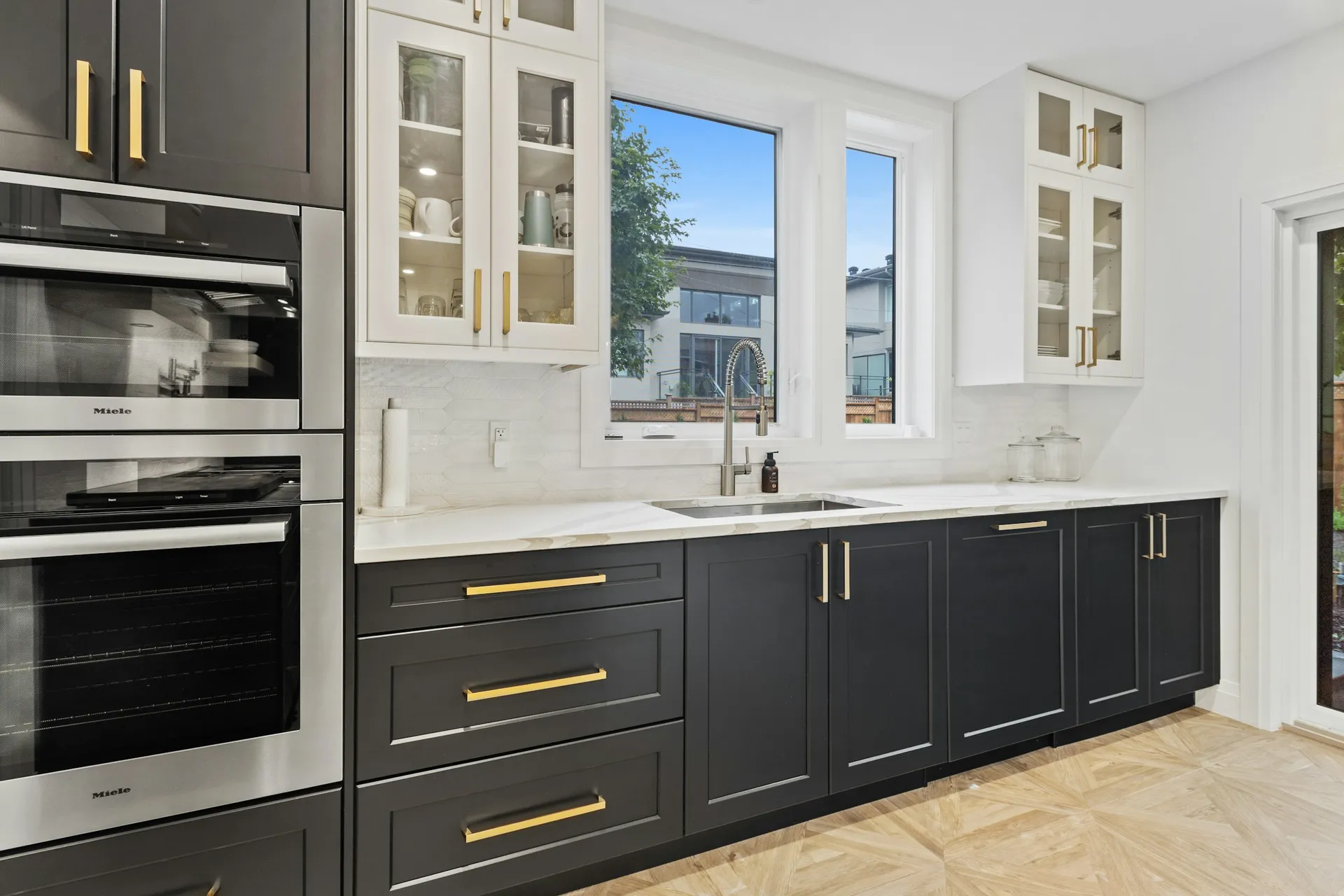
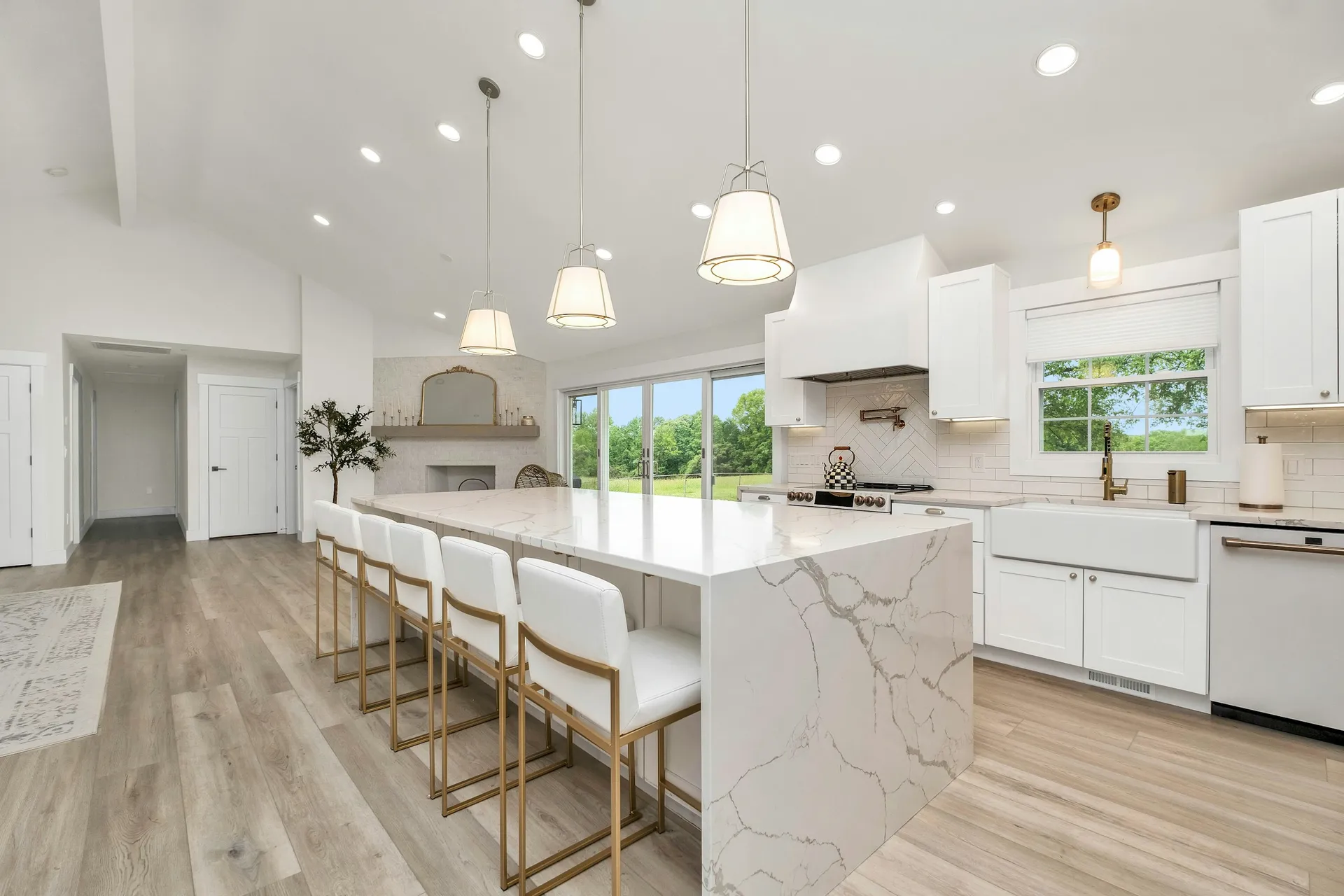
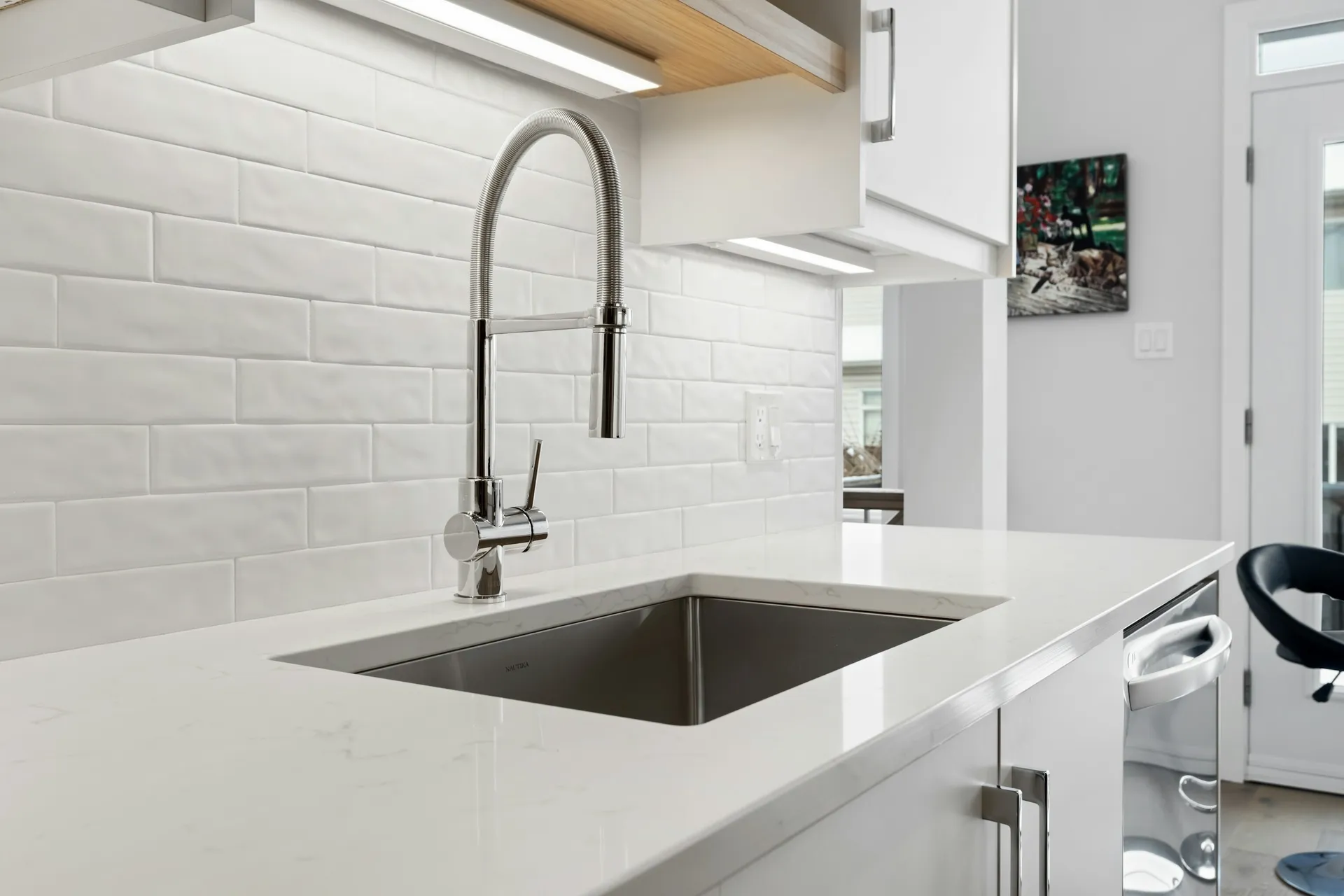
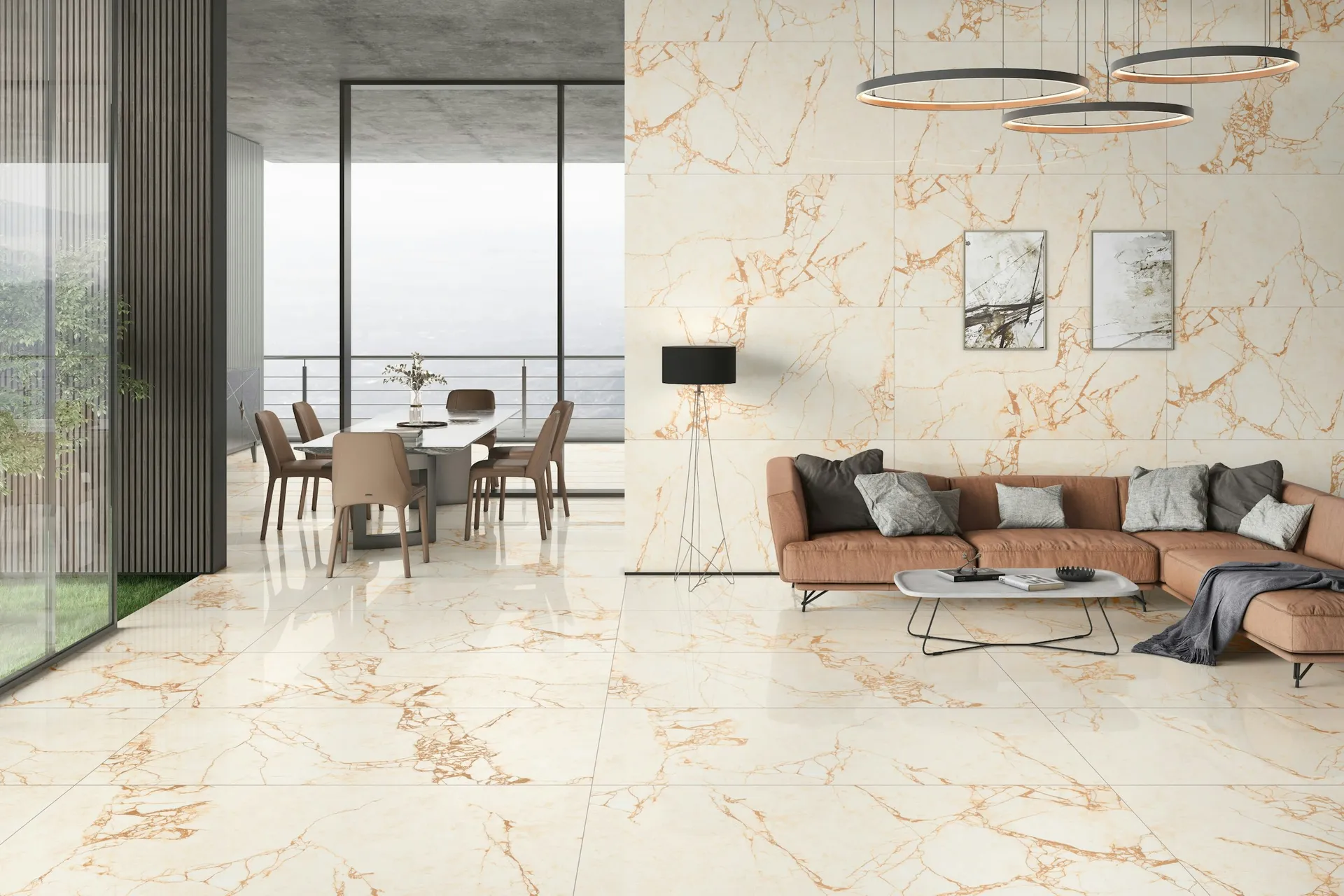
The countertop is the hardest-working surface in the home. In a Singapore kitchen it takes hot woks, turmeric, chilli oil, wet dish racks and daily scrubbing, often in a small space where it is also the main prep and serving area.
There is no single best material. Quartz is the most common choice in HDB and condo kitchens because it resists stains and comes in many colours at a mid-range price. Sintered stone has become the popular upgrade, mainly for its heat and scratch resistance. Solid surface is chosen for seamless joints and curves, granite for value among natural stones, marble and quartzite for looks, stainless steel for heavy cooking, and laminates for budget or rental kitchens.
Countertops are usually priced per foot run (pfr) and quoted separately from cabinets. Below, we compare every option a Singapore homeowner is realistically offered, with indicative prices where a published source gives them, and explain what to ask the fabricator so you are comparing like with like.
Countertops options at a glance
| Option | Cost | Durability | Upkeep | Best for |
|---|---|---|---|---|
| Quartz (engineered stone) | Mid-range | good | low | Most HDB and condo kitchens with everyday cooking |
| Sintered stone and porcelain slab | Upper | excellent | low | Heavy cooking, wok users and outdoor or sunny kitchens |
| Solid surface | Mid-range | moderate | medium | Seamless L-shaped runs, curved islands and integrated sinks |
| Compact laminate | Mid-range | good | low | Slim, modern countertops and budget-conscious wet kitchens |
| Laminate countertop (HPL on board) | Budget | moderate | medium | Rental units, quick refreshes and very tight budgets |
| Granite | Upper | excellent | medium | Heavy cooking and owners who want natural stone at moderate cost |
| Marble | Premium | moderate | high | Luxury kitchens, baking stations and light-use show kitchens |
| Quartzite | Premium | excellent | medium | Owners who want a marble look with far better durability |
| Stainless steel | Upper | excellent | medium | Wet kitchens, serious home cooks and industrial-style homes |
| Solid timber | Upper | moderate | high | Islands, breakfast counters and dry prep areas |
| Terrazzo | Upper | good | medium | Statement islands and retro or modern kitchens |
Cost is relative within countertops ($ budget to $$$$ premium). Actual prices depend on brand, size and workmanship, so compare itemised quotes.
Quartz (engineered stone)
- Mid-range Mid-range
- Durability: good
- Upkeep: low
Crushed natural quartz bound with resin and pigments into slabs. The most common countertop in Singapore kitchens, offering stain resistance and consistent colour at a mid-range price.
Best for: Most HDB and condo kitchens with everyday cooking
Pros
- Non-porous and stain-resistant; no sealing needed
- Wide range of colours, including marble-look designs
- Consistent pattern from slab to slab
- Good impact resistance thanks to the resin binder
Cons
- Not heat-proof; hot pots can scorch or crack it, so use a trivet
- Strong alkaline or acidic cleaners can damage the surface
- Joints are visible on long or L-shaped runs
- Lighter colours can yellow over time in strong sun
Qanvast (in a partnership article with a stone fabricator) gives $120 to $180 per foot run for quartz, and SmartCalculator gives the same range for 2026 (both indicative).
Quartz's main weakness is heat. Qanvast's comparison puts quartz's heat tolerance at around 100°C, compared with about 300°C for sintered stone, so a pot straight off the hob should go on a trivet.
A note on fabrication: engineered stone releases fine crystalline silica dust when cut, and Australia banned new engineered stone benchtops, panels and slabs from 1 July 2024 over silicosis risk to workers. Installed countertops do not need to be removed. If you choose quartz, ask your fabricator to cut in a workshop with dust control rather than dry-cutting on site.
Sintered stone and porcelain slab
- Upper Upper
- Durability: excellent
- Upkeep: low
Natural minerals fused under very high heat and pressure into dense, thin slabs. The popular upgrade from quartz for owners who cook hot and hard.
Best for: Heavy cooking, wok users and outdoor or sunny kitchens
Pros
- High heat resistance (Qanvast cites up to about 300°C)
- Very scratch- and stain-resistant
- UV-resistant, so colours do not fade in sun
- Large slab formats mean fewer joints
Cons
- Can chip or crack under a heavy impact, especially at edges
- Costs more than quartz
- Needs a skilled fabricator and specialised tools
- Printed patterns may not run through the thickness, so chips and cut edges can show
Indicative prices vary by source: Qanvast's fabricator partner lists $160 to $240 per foot run, while SmartCalculator estimates $220 to $380 per foot in 2026, "roughly double quartz". Qanvast's comparison article gives a Mohs hardness of about 7 to 8 for sintered stone against 6 to 7 for quartz.
Slabs come in several thicknesses (Qanvast cites 6.5mm, 12mm and 20mm for one range) and large formats such as 1,600mm by 3,200mm. Thinner slabs are usually laminated to a thicker edge or supported on a board, so ask how the edge is built.
Ask for a mitred or eased edge rather than a sharp square edge, which is where chips start. Check whether the pattern is printed on the surface or runs through the body. See also our upcoming comparison of quartz and sintered stone.
Solid surface
- Mid-range Mid-range
- Durability: moderate
- Upkeep: medium
An acrylic or polyester resin mixed with minerals, which can be joined invisibly and shaped into curves and integrated sinks. Once the most common countertop in Singapore, now mainly chosen for seamless designs.
Best for: Seamless L-shaped runs, curved islands and integrated sinks
Pros
- Seams can be glued and sanded so joints are nearly invisible
- Can be thermoformed into curves and integrated sinks
- Non-porous and hygienic
- Scratches can be sanded out and the surface renewed
Cons
- Scratches more easily than stone
- Not heat-resistant; hot pots can scorch or crack it
- Stain resistance depends on resin quality
- Looks less like real stone than quartz or sintered stone
Solid surface's strength is fabrication. Because joints are bonded and sanded, an L-shaped or U-shaped run can look like one continuous piece, and the sink can be moulded from the same material. Home & Decor notes it has been widely used for islands for this reason.
The trade-off is softness and heat. Use a trivet for anything from the hob and a chopping board for cutting. Fine scratches can be buffed or sanded out, which very few other countertops allow.
Ask whether the product is acrylic-based or polyester-based and what thickness is used; quality varies between products. Solid surface remains a good choice for minimalist and futuristic designs with curved forms.
Compact laminate
- Mid-range Mid-range
- Durability: good
- Upkeep: low
Solid, self-supporting panels made from layers of kraft paper and resin pressed at high pressure. Thin (often 6mm to 12mm), waterproof and increasingly popular for a slim modern edge.
Best for: Slim, modern countertops and budget-conscious wet kitchens
Pros
- Fully waterproof and non-porous
- Very slim profile for a modern look
- Resistant to impact, scratches and moderate heat
- Lighter than stone, so easier to install
Cons
- The dark core shows at the edge, which some people dislike
- Undermount sinks need careful detailing
- Fewer stone-like patterns than quartz
- Not as heat-resistant as sintered stone
Home & Decor describes a compact laminate made from kraft paper and resin at about 6mm thick, marketed as waterproof and resistant to heat, impact, scratches and fingerprints. Thicker panels are typically used for countertops so the edge is stiffer.
Unlike ordinary laminate, compact laminate is solid all the way through, so it does not need a wood-based board underneath and will not swell if water gets into a joint. That makes it practical for wet kitchens and service yards.
Ask what thickness is proposed, how the sink is mounted, and how the hob cut-out corners are radiused (sharp inside corners can crack). No published Singapore price range was found, so compare quotes directly.
Laminate countertop (HPL on board)
- Budget Budget
- Durability: moderate
- Upkeep: medium
High-pressure laminate bonded to a plywood or particleboard core, sometimes post-formed with a rounded front edge. The cheapest countertop, common in flat-pack and rental kitchens.
Best for: Rental units, quick refreshes and very tight budgets
Pros
- Lowest cost; SmartCalculator estimates $30 to $70 per foot
- Huge range of colours and patterns
- Easy to install and replace
- Non-porous surface that wipes clean
Cons
- Hot pans can scorch it and knives can nick it
- The wood-based core swells if water gets into joints or the sink cut-out
- Cannot be repaired once damaged
- Shorter lifespan than stone or solid surface
SmartCalculator estimates laminate worktops at $30 to $70 per foot (2026, indicative), well below any stone option.
The weak point is water. The sink cut-out and joints must be fully sealed, and a top-mount sink is usually safer than an undermount sink with a laminate top. Choose a moisture-resistant core if available.
Laminate is a sensible choice if you plan to upgrade later, for a rental flat, or for a secondary counter (a laundry or service yard). For the main kitchen counter in a home you will live in for years, quartz or compact laminate usually pays back the difference.
Granite
- Upper Upper
- Durability: excellent
- Upkeep: medium
A hard natural igneous stone with a speckled pattern. Still chosen for its toughness and value among natural stones, especially by heavy cooks.
Best for: Heavy cooking and owners who want natural stone at moderate cost
Pros
- One of the hardest natural stones; resists scratches and heat
- Each slab is unique
- Resists stains once sealed
- Generally cheaper than marble or quartzite
Cons
- Needs periodic sealing
- Speckled patterns look dated to some people
- Heavy; long spans and overhangs need support
- Colour and pattern vary between slabs, so choose the actual slab
Qanvast's fabricator partner lists granite from about $160 per foot run and up (indicative). The same article recommends resealing kitchen granite every few years, wiping it dry after use and dealing with spills quickly.
Granite is less porous than marble and handles heat well, which suits wok cooking. Darker granites hide stains and wear better than light ones.
Ask to see the actual slab before cutting, ask how many slabs are needed and where joints will fall, and ask what sealer is used and how often it should be reapplied.
Marble
- Premium Premium
- Durability: moderate
- Upkeep: high
A classic natural stone with soft veining. Beautiful and cool to the touch, but soft and porous, so it stains and etches easily in a working kitchen.
Best for: Luxury kitchens, baking stations and light-use show kitchens
Pros
- Distinctive natural veining; each slab is unique
- Stays cool, which suits pastry and baking work
- Can be honed or polished and restored by a specialist
- A timeless look for classic and luxury interiors
Cons
- Etches (dull marks) from acids such as lemon, vinegar and tomato
- Porous; stains from oil, turmeric and curry without frequent sealing
- Scratches easily
- Among the most expensive options
Qanvast's fabricator partner lists marble from about $200 per foot run and up (indicative), and Home & Decor notes it is softer, stains easily and must be sealed often.
Sealing helps against stains but does not prevent etching, which is a chemical reaction with acids. If you love marble, accept that it will patina, or use it on an island or baking counter while the main cooking run uses quartz or sintered stone.
A honed (matt) finish hides etching better than a polished one. Marble suits luxury, classic and French-style kitchens.
Quartzite
- Premium Premium
- Durability: excellent
- Upkeep: medium
A natural metamorphic stone formed from sandstone. Looks like marble but is much harder, and genuine quartzite does not etch from acids.
Best for: Owners who want a marble look with far better durability
Pros
- Much harder than marble; resists scratches
- Genuine quartzite does not etch from lemon juice or vinegar
- Marble-like veining in natural stone
- Handles heat well
Cons
- Some stones sold as "quartzite" or "soft quartzite" are actually marble
- Some varieties are porous and need sealing
- Hard to cut, so fabrication costs more
- Premium price and limited availability
The Natural Stone Institute's consumer site explains that true quartzite is metamorphosed sandstone, and that some stones sold as quartzite are actually marble or dolomitic marble. It suggests three simple tests on a sample: true quartzite scratches glass, resists a knife blade, and does not etch from lemon juice.
Whether it needs sealing depends on porosity. Some quartzites need none, while others need sealing at installation and periodically after; darkening around the sink is a sign it needs resealing. Care is similar to granite: gentle cleanser, quick clean-up of spills, and a chopping board (quartzite's hardness dulls knives).
Ask your supplier for an offcut to test before you commit to a slab.
Stainless steel
- Upper Upper
- Durability: excellent
- Upkeep: medium
Sheet stainless steel over a board core, often with an integrated sink and upstand. The commercial kitchen choice, for owners who cook hard and value hygiene over looks.
Best for: Wet kitchens, serious home cooks and industrial-style homes
Pros
- Heat-proof and waterproof
- Hygienic and easy to sanitise
- Can be made seamless with an integrated sink and backsplash
- Will not stain from spices or oil
Cons
- Scratches and dents; a brushed finish hides this better
- Shows fingerprints and water spots
- Can feel noisy and cold
- Custom fabrication; fewer contractors do it well
Stainless steel is the most practical surface for a wet kitchen where heavy frying and wok cooking happen. It pairs naturally with stainless steel cabinets and an integrated sink, which removes the sink joint as a leak point.
Ask what grade and thickness the sheet is, what board sits underneath (it should be moisture-resistant), and whether the sink is welded in or dropped in. A brushed or textured finish ages better than a mirror finish because scratches blend into the grain.
No published Singapore price range per foot run was found for stainless worktops, so request quotes alongside stone options.
Solid timber
- Upper Upper
- Durability: moderate
- Upkeep: high
Solid wood or butcher-block (glued strips) countertops. Warm and natural, but they need regular oiling and careful use near the sink in Singapore humidity.
Best for: Islands, breakfast counters and dry prep areas
Pros
- Warm, natural look and feel
- Can be sanded and re-oiled to remove marks
- Kind to knives
- Suits Scandinavian, Japanese and rustic kitchens
Cons
- Water around the sink causes staining, swelling and mould if not maintained
- Scorches from hot pans
- Needs regular oiling or a hard lacquer
- Moves with humidity, so needs room to expand
Timber works best where it stays dry: an island, a breakfast bar or a dining extension, with stone or compact laminate around the sink and hob. Home & Decor describes butcher blocks as thick slabs of glued-together wood.
Ask whether the top will be oiled (easy to repair, needs regular reapplication) or lacquered (lower maintenance, but harder to repair). In Singapore's humidity, ensure all faces including the underside are sealed, and leave expansion gaps at walls.
A timber top suits Scandinavian, rustic and Muji kitchens.
Terrazzo
- Upper Upper
- Durability: good
- Upkeep: medium
Chips of marble, glass or stone set in a cement or resin binder and polished. A playful, retro-modern look that is back in fashion, mostly in precast slab form.
Best for: Statement islands and retro or modern kitchens
Pros
- Distinctive speckled look in many colourways
- Durable when well made and sealed
- Can match terrazzo floors or backsplashes
- Available as precast slabs and tiles
Cons
- Cement-based terrazzo is porous and needs sealing
- Marble chips can etch from acids
- Limited local fabrication options
- Price and quality vary widely
Terrazzo for countertops is usually supplied as precast slabs (cement or resin-based) rather than poured in place. Resin-based terrazzo is less porous; cement-based terrazzo needs sealing like natural stone. Home & Decor also notes recycled-glass terrazzo as a sustainable variant, though it reported no commercial recycled-glass product in Singapore at the time.
Ask the supplier what binder is used, whether the slab is sealed, and how it handles acids and heat. Test a sample with lemon juice and oil before deciding.
Terrazzo suits retro and modern kitchens, often as an island top or backsplash rather than the whole run.
How to choose a countertop
Rank what matters most in your kitchen, then shortlist.
- Heat: if pots go straight from the hob to the counter, choose sintered stone, granite, quartzite or stainless steel. Quartz and solid surface need trivets.
- Stains: turmeric, curry and chilli oil are the real test in Singapore. Quartz, sintered stone, compact laminate and stainless steel resist stains best; marble and unsealed natural stone are the weakest.
- Scratches and chips: sintered stone and quartzite resist scratches, but thin sintered stone can chip at edges. Solid surface scratches easily but can be sanded.
- Joints: long or L-shaped runs need joints in stone. Solid surface hides them best.
- Budget: laminate is cheapest, then quartz and solid surface, then sintered stone and granite, then marble and quartzite.
Indicative prices
These are published estimates, not quotes, and prices vary with brand, colour, thickness and edge profile:
- Laminate: about $30 to $70 per foot (SmartCalculator, 2026)
- Quartz: about $120 to $180 per foot run (Qanvast fabricator partner; SmartCalculator, 2026)
- Sintered stone: about $160 to $240 per foot run (Qanvast fabricator partner) or $220 to $380 per foot (SmartCalculator, 2026)
- Granite: from about $160 per foot run (Qanvast fabricator partner)
- Marble: from about $200 per foot run (Qanvast fabricator partner)
What to ask the fabricator
- Is the price per foot run of a standard depth (often about 600mm), and what does it include?
- How are the edges built, and what profile (square, eased, mitred)?
- How many slabs are needed, and where will the joints fall? Can I approve the layout?
- Are the hob and sink cut-outs, sink installation, backsplash and skirting included?
- Is the material cut in a workshop with dust control, or on site?
- What sealing or care is required, and is there a warranty on chips and cracks?
Singapore rules and practical points
- HDB lists construction of a kitchen countertop as not needing a permit, subject to conditions: no concrete shelves, a maximum 50mm combined thickness for cement mortar base and tile finishes, and the owner is responsible for removing and reinstating fixtures for inspection and maintenance.
- Undermount sinks rely on adhesive and brackets under the stone. Make sure the cabinet below is waterproof (see kitchen cabinets).
- If you are extending a kitchen into the service yard, HDB allows only one layer of 63mm hollow block or 80mm glass block for the sink support, and exhaust fans are not allowed in the service yard.
- Measure for the countertop after the cabinets are installed, not from drawings, so the stone fits the real carcass.
Common mistakes
- Choosing a light marble-look quartz for a heavy curry kitchen without testing a sample with turmeric.
- Putting quartz next to a high-output gas burner and then resting hot woks on it.
- Approving a sintered stone top without asking how the edge is made.
- Not checking where joints will fall on an L-shaped counter.
Our post on variation orders explains why fixing the countertop specification early avoids surprise costs later.