Air-conditioning is one of the largest energy users at home. NEA's 2017 household survey found that air-conditioners accounted for about 24% of electricity use in a typical home, more than any other appliance. It is also one of the few appliances tied closely to your renovation: piping, trunking, false ceilings, power points and the outdoor unit location all need to be planned before carpentry and ceilings go in.
The main choices for Singapore homes are:
- Split systems: a wall-mounted indoor unit (fan coil) connected by pipes to an outdoor condensing unit. A single-split (System 1) has one indoor unit per outdoor unit; a multi-split (System 2, 3 or 4) runs several indoor units from one outdoor unit.
- Concealed systems: ceiling cassettes and ducted units hidden in a false ceiling, more common in condos and landed homes.
- Other types: window and casement units, portable units and, in landed homes, three-phase VRF systems.
Every option below is compared on cost, efficiency and suitability, followed by a guide to NEA energy labels, HDB and BCA installation rules, sizing, servicing and common mistakes.
Aircon systems options at a glance
| Option | Cost | Durability | Upkeep | Best for |
|---|---|---|---|---|
| Single-split (System 1) | Mid-range | excellent | medium | Living rooms, single rooms, or homes that want independent units |
| Multi-split System 2 or System 3 | Mid-range | good | medium | 3-room and 4-room HDB flats and smaller condos |
| Multi-split System 4 | Upper | good | medium | 4-room and 5-room HDB flats and family condos |
| Non-inverter split units | Budget | good | medium | Rooms used briefly or rarely, if a suitable rated model is available |
| Ceiling cassette | Upper | good | medium | Large living and dining spaces in condos and landed homes |
| Ducted (concealed) units | Premium | good | high | Premium condos and landed homes with deep false ceilings |
| Window and casement units | Budget | moderate | low | Replacing an existing window unit in an older flat |
| Portable air-conditioners | Budget | moderate | medium | Rentals and temporary cooling where installation is not possible |
| Three-phase VRF systems | Premium | excellent | medium | Large landed homes with many rooms |
| DC ceiling fans (as a partner to aircon) | Budget | good | low | Living rooms and bedrooms, alongside or instead of aircon |
Cost is relative within aircon systems ($ budget to $$$$ premium). Actual prices depend on brand, size and workmanship, so compare itemised quotes.
Single-split (System 1)
- Mid-range Mid-range
- Durability: excellent
- Upkeep: medium
One indoor unit connected to its own outdoor unit. Each room runs independently, so a fault in one does not affect the others.
Best for: Living rooms, single rooms, or homes that want independent units
Pros
- Each room is independent; one breakdown does not affect others
- Outdoor unit sized exactly for one room
- Simpler to replace one unit at a time
- New models must meet at least 4 ticks since April 2025
Cons
- Needs one outdoor unit per room, taking more ledge or wall space
- More outdoor units to install and service
- Usually costs more in total than one multi-split for several rooms
- HDB limits how many condensing units fit (see guide)
NEA raised the Minimum Energy Performance Standard (MEPS) for single-split air-conditioners to 4 ticks from 1 April 2025, so new models supplied from that date must be at least 4-tick. NEA's release notes that products supplied to the market before the effective date are exempted, so check the tick rating on the label in the shop.
In HDB flats, outdoor units sit on the air-conditioner ledge where there is one, or at an approved location for flats without a ledge. HDB's guidelines for flats with a 40A main switch allow a maximum of two split-type condensing units, with a weight limit of 110 kg per wall panel and one wall-mounted condensing unit per wall panel. That is why many HDB owners combine a System 1 with a multi-split, or use one large multi-split.
Multi-split System 2 or System 3
- Mid-range Mid-range
- Durability: good
- Upkeep: medium
One outdoor unit running two or three indoor units. The most common setup in HDB flats, typically covering the bedrooms or the living room and bedrooms.
Best for: 3-room and 4-room HDB flats and smaller condos
Pros
- One outdoor unit serves several rooms, saving ledge space
- Usually cheaper than buying the same number of single-splits
- New multi-split models must meet 5 ticks since April 2025
- Indoor units can be different capacities for different rooms
Cons
- If the outdoor unit fails, every connected room loses cooling
- Longer pipe runs to far rooms need careful planning
- Replacing one indoor unit may mean matching the same system
- Heavier outdoor unit; check weight limits
From 1 April 2025, NEA raised MEPS for multi-split air-conditioners to 5 ticks, the highest rating. Multi-split inverter units are rated on a weighted COP that combines full-load and half-load performance, which reflects how inverter units actually run at home.
A System 3 commonly covers the bedrooms of a 3-room or 4-room flat, or two bedrooms plus the living room. Plan the indoor unit positions with your carpentry and false ceiling, so piping can run internally (an HDB requirement) and trunking or ceiling boxes can hide it. Ask your installer to confirm the total running current and weight against HDB's limits for your flat.
Multi-split System 4
- Upper Upper
- Durability: good
- Upkeep: medium
One larger outdoor unit running four indoor units, typically covering the living room and three bedrooms in a 4-room or 5-room flat.
Best for: 4-room and 5-room HDB flats and family condos
Pros
- Cools four rooms from one outdoor unit
- Saves outdoor space compared with several single-splits
- Must meet 5 ticks if supplied from April 2025
- One installation and servicing visit covers the whole system
Cons
- Single point of failure for four rooms
- Large, heavy outdoor unit; check ledge and wall panel limits
- May need a dedicated circuit; check your electrical capacity
- Higher upfront cost
A System 4 is popular because it fits the cooling of a whole family flat into one outdoor unit. Before committing, check three things with your installer and electrician:
- Weight and location: the condensing unit must suit your ledge or approved location; HDB sets a limit of 110 kg per wall panel for flats with a 40A main switch.
- Electrical supply: HDB says the running current should be restricted by a 20A double pole isolator or 15A power point, and new wiring must be done by an EMA licensed electrical worker.
- Pipe lengths: long runs to far rooms reduce efficiency and must stay within the manufacturer's limits.
If you only use two rooms most nights, compare the cost of a System 3 plus a System 1 for the living room, which keeps one room running if the other system fails.
Non-inverter split units
- Budget Budget
- Durability: good
- Upkeep: medium
Older-style units with a compressor that switches fully on and off rather than adjusting its speed. Now a small part of the market.
Best for: Rooms used briefly or rarely, if a suitable rated model is available
Pros
- Simpler technology, sometimes cheaper to buy
- Fine for rooms used for short periods
- Must still meet the same MEPS as inverter models of the same type
- Fewer electronics to fail
Cons
- Temperature swings as the compressor cycles on and off
- Less efficient at part load, which is how homes usually run
- Noisier when the compressor kicks in
- Limited model choice
An inverter unit varies its compressor speed to hold the set temperature, so it runs efficiently at part load. A non-inverter unit runs at full speed, switches off when the room is cool, then switches on again. NEA's MEPS table sets the same minimum figure for single-split inverter (weighted COP) and non-inverter (full-load COP) units from April 2025, but because homes rarely need full cooling for long, inverter units usually suit long hours of use better.
For bedrooms used all night, an inverter unit is the usual recommendation. Always compare the tick rating and the estimated annual energy cost on the NEA label rather than the inverter label alone.
Ceiling cassette
- Upper Upper
- Durability: good
- Upkeep: medium
An indoor unit set into a false ceiling with a grille that blows air in two or four directions. Common in condo living rooms and landed homes.
Best for: Large living and dining spaces in condos and landed homes
Pros
- Even air distribution across large rooms
- Keeps walls free for carpentry and art
- Neater look than wall-mounted units
- Good for open-plan living and dining
Cons
- Needs a false ceiling with enough depth
- Servicing needs ladder access to the ceiling
- Higher cost of unit and installation
- A drain pump or condensate route must be planned
Cassettes need ceiling space for the unit body, piping and condensate drainage, so they are planned with the false ceiling rather than added later. Ask the installer for the required ceiling void, the position of access panels and how condensate will drain. HDB requires condensation water to be discharged into a floor trap in your flat.
Cassettes are less common in HDB flats because of ceiling height and the cost of a full false ceiling. In condos, check the developer's provisions and your MCST's by-laws on outdoor unit locations before choosing.
Ducted (concealed) units
- Premium Premium
- Durability: good
- Upkeep: high
An indoor unit hidden above the false ceiling, delivering air through ducts to slim linear or square diffusers. The cleanest look, at the highest cost.
Best for: Premium condos and landed homes with deep false ceilings
Pros
- Almost invisible: only grilles show
- One unit can serve several outlets in a large space
- Quiet, with no unit noise in the room
- Frees walls completely
Cons
- Needs a deep false ceiling, lowering the room height
- Highest installation cost
- Ducts and filters need regular access and cleaning
- Harder to repair or replace
Ducted systems need careful design: the indoor unit size, duct routes, return air path and access panels for servicing. A poorly designed system can be noisy or leave rooms unevenly cooled. Ask who designs the ductwork and for drawings showing access panels.
Because ducts and filters collect dust and can harbour mould in humid conditions, plan regular servicing and easy access. Ducted units suit Luxury and Minimalist interiors where visible units would spoil the look.
Window and casement units
- Budget Budget
- Durability: moderate
- Upkeep: low
A single self-contained unit fitted in a window or wall opening. Once common in older HDB flats, now mainly used as replacements in existing openings.
Best for: Replacing an existing window unit in an older flat
Pros
- No separate outdoor unit or long piping
- Lower purchase and installation cost
- Simple to replace like for like
- Must meet at least 2 ticks under NEA rules
Cons
- Noisier, as the compressor is in the unit
- Blocks part of a window and the view
- Fewer models and lower efficiency than modern splits
- Installation location must follow HDB rules
NEA raised MEPS for casement and window units to 2 ticks from 1 January 2022. These units are less efficient than modern split systems, so compare the estimated annual energy cost on the label before buying.
HDB's guidelines cover window units as well as split units: they must be installed at approved locations and by approved methods, cannot be placed along the common corridor, and must not cause vibration. Check with your HDB Branch if you are unsure about an existing opening. Many owners renovating older flats replace window units with split systems.
Portable air-conditioners
- Budget Budget
- Durability: moderate
- Upkeep: medium
A movable unit on wheels with an exhaust hose through a window gap. A stopgap for rooms where fixed units are not possible.
Best for: Rentals and temporary cooling where installation is not possible
Pros
- No installation works
- Can be moved between rooms
- Regulated by NEA, with tick ratings since April 2024
- Low upfront cost
Cons
- Much less efficient than split systems
- Noisy, with the compressor in the room
- Exhaust hose needs a window gap that lets warm air back in
- Takes floor space; water tank may need emptying
NEA introduced energy labelling and minimum standards for portable air-conditioners from 1 April 2024. Their efficiency thresholds are far lower than for split systems, which reflects how much less efficient they are.
Use a portable unit as a temporary solution, for example in a rental where you cannot install a split system, or in a room while waiting for renovation. Seal the window gap around the hose as well as you can, and empty or drain condensate as the manual says.
Three-phase VRF systems
- Premium Premium
- Durability: excellent
- Upkeep: medium
Variable refrigerant flow systems: one or more large outdoor units serving many indoor units, with individual room control. Used in larger landed homes.
Best for: Large landed homes with many rooms
Pros
- Serves many rooms from compact outdoor plant
- Efficient at part load with individual room control
- Supports wall, cassette and ducted indoor units together
- Regulated by NEA with its own tick rating
Cons
- Needs a three-phase supply
- Highest system cost; specialist design and installation
- Complex repairs; depends on the installer
- Overkill for most HDB flats and condos
NEA regulates three-phase VRF air-conditioners under its labelling and MEPS scheme, with a rating based on an integrated efficiency measure. These systems are designed by specialist contractors, so ask for a load calculation, a piping and wiring layout, and the maintenance plan.
VRF makes sense when a landed home has many rooms to cool and limited space for outdoor units. Electrical works for the three-phase supply must be designed and carried out by a licensed electrical worker.
DC ceiling fans (as a partner to aircon)
- Budget Budget
- Durability: good
- Upkeep: low
Not an air-conditioner, but the most common way to cut aircon use. A ceiling fan moves air so the room feels cooler at a higher set temperature.
Best for: Living rooms and bedrooms, alongside or instead of aircon
Pros
- Uses far less electricity than air-conditioning
- Lets you set the aircon warmer while staying comfortable
- DC fans are eligible for Climate Vouchers
- Many include an LED light
Cons
- Does not lower the air temperature or humidity
- Needs a secure ceiling fixing and enough height
- Blades collect dust
- Must carry the SAFETY Mark
NEA has encouraged households to set air-conditioners to 25°C or higher to save energy. A ceiling fan makes that setting feel cooler, and on drier evenings may be enough on its own. Direct current (DC) fans are among the product types eligible for Climate Vouchers, and fans must carry the SAFETY Mark to be sold in Singapore.
Plan fan points at the same time as your aircon and lighting, so the fan does not sit right under a downlight or blow directly into an air-conditioner. See our lighting guide for fans with lights.
Read the NEA energy label
Under NEA's Mandatory Energy Labelling Scheme, household air-conditioners are rated from 1 to 5 ticks; more ticks means more efficient. The label also shows the estimated annual energy cost and consumption, which is the easiest way to compare models. NEA has raised the minimum standards (MEPS) several times:
- 1 January 2022: casement and window units raised to 2 ticks.
- 1 April 2024: portable air-conditioners regulated.
- 1 April 2025: single-split units raised to 4 ticks and multi-split units to 5 ticks.
Products supplied before an effective date are exempted, so older stock may still carry a lower rating. Air-conditioners with a 5-tick rating are eligible for Climate Vouchers.
Follow HDB's installation rules
HDB's air-conditioner installation guidelines include:
- Installer: a BCA trained air-conditioning condensing unit installer.
- Installation report: submitted to the HDB Branch managing your flat within 14 days after installation.
- Location: at the approved location and by the approved method; the ledge is strictly for the condensing unit only, and condensing units cannot be located along the common corridor.
- Piping: all piping must be run internally, joints insulated to prevent dripping, and pipes not embedded in reinforced concrete slabs, columns or beams. No hacking of holes through existing reinforced concrete.
- Drainage: condensation water must be discharged into a nearby floor trap in your flat.
- Vibration: units must not cause vibration, and rubber padding should be provided at the base.
- Electrical loading: you and your installer must check the total running current does not exceed your flat's approved rating.
Blocks completed on or after 1 January 1994, or upgraded under MUP or HIP, have a 40A main switch and need no HDB permit for air-conditioner installation, but still follow the guidelines: up to 2 split-type condensing units, 110 kg per wall panel. Older flats with a 30A main switch need an electrical permit for a new 15A power point or 20A isolator, and HDB caps the total running current (8.5A for 3-room, 4-room, 5-room and Executive Maisonette flats) and condensing unit weight (80 kg).
Follow BCA's safety rules
BCA requires units installed outside or projecting from a building to be installed by a trained installer and supported by a stainless steel bracket or a concrete ledge or casing designed for the purpose. Owners should check supports for corrosion or damage at least every 6 months and replace badly corroded brackets.
Plan trunking and concealment
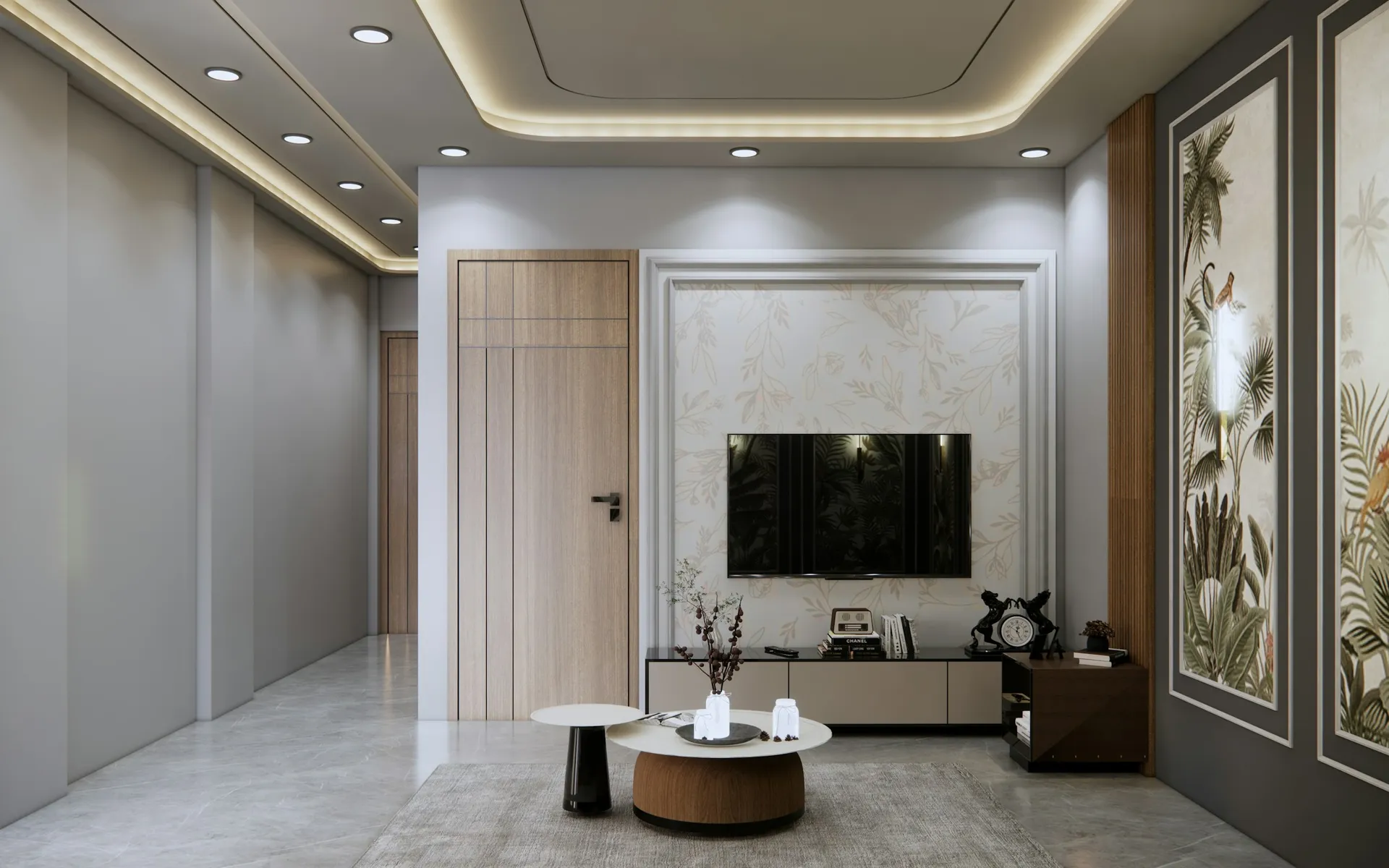
Because piping must run internally, decide early how to hide it: in the false ceiling, behind carpentry, or in neat trunking along the wall. Agree the indoor unit positions before carpentry is measured, keep units clear of wardrobes and curtain tracks, and leave access for servicing. Avoid enclosing the outdoor unit in a box or false ledge, which can restrict airflow.
Size it correctly
An undersized unit runs flat out and never cools the room; an oversized one cycles and leaves the air clammy. Ask the installer to size each room using its area, sun exposure, ceiling height and how many people use it, and to show the calculation.
Use and servicing
- Set 25°C or higher, as NEA recommends, and use a fan for extra comfort.
- Clean filters regularly and have units serviced; units run daily need servicing more often.
- Keep the outdoor unit clear and the ledge clean, as HDB's Town Council conditions require.
- Watch for dripping, which usually means a blocked drain line.
Common mistakes
- Choosing units on purchase price rather than the annual energy cost on the label.
- Fixing indoor unit positions after carpentry is built.
- Not checking HDB's condensing unit limits before buying a system.
- Pipes and trunking left exposed across a feature wall.
Budget
Multi-split systems usually cost less than the same number of single-splits; concealed cassettes and ducted systems cost the most. A higher tick rating usually costs more upfront but less to run. Note that renovation loans usually exclude air-conditioning, so budget for it separately; see our renovation loan guide.
JIAHOME plans aircon positions, trunking routes and false ceilings in your 2D layout and 3D views, so they fit around your carpentry. See our services.