The sink is the busiest spot in a Singapore kitchen: rice washing, marinating, defrosting, dishwashing, and in many homes, washing vegetables for every meal. It is also where most kitchen leaks start, so the sink, the tap and the cabinet below them have to be chosen together.
Sinks differ in three ways: how they are mounted (top-mount, undermount, flush or integrated), what they are made of (stainless steel, granite composite, ceramic, solid surface) and how many bowls they have. Taps differ in spout style, spray functions and water efficiency.
In Singapore, kitchen taps come under PUB's Mandatory Water Efficiency Labelling Scheme (WELS). Since 1 April 2019, only fittings rated 2 ticks and above are allowed for supply and installation. This page covers every sink and tap option a homeowner is realistically offered, with the rules and care points that matter here.
Kitchen sinks and taps options at a glance
| Option | Cost | Durability | Upkeep | Best for |
|---|---|---|---|---|
| Stainless steel undermount sink | Mid-range | excellent | low | Quartz, sintered stone and granite countertops |
| Stainless steel top-mount sink | Budget | good | medium | Laminate countertops, rental flats and budget renovations |
| Flush-mount or integrated sink | Upper | good | low | Minimalist kitchens and seamless solid surface or stainless worktops |
| Granite composite sink | Upper | good | medium | Kitchens that want a matt, colour-matched sink |
| Ceramic or fireclay sink | Upper | good | medium | Classic, country and colonial-style kitchens |
| Workstation sink | Upper | excellent | low | Small kitchens with limited counter space |
| Single-lever mixer tap | Budget | good | low | Every kitchen; the safe default |
| Pull-out or pull-down tap | Mid-range | good | medium | Large or double-bowl sinks and frequent cooks |
| Sensor or touch tap | Upper | moderate | medium | Households that prioritise hygiene and convenience |
| Filter tap (three-way mixer) | Upper | good | medium | Households that drink filtered water and want a clean countertop |
Cost is relative within kitchen sinks and taps ($ budget to $$$$ premium). Actual prices depend on brand, size and workmanship, so compare itemised quotes.
Stainless steel undermount sink
- Mid-range Mid-range
- Durability: excellent
- Upkeep: low
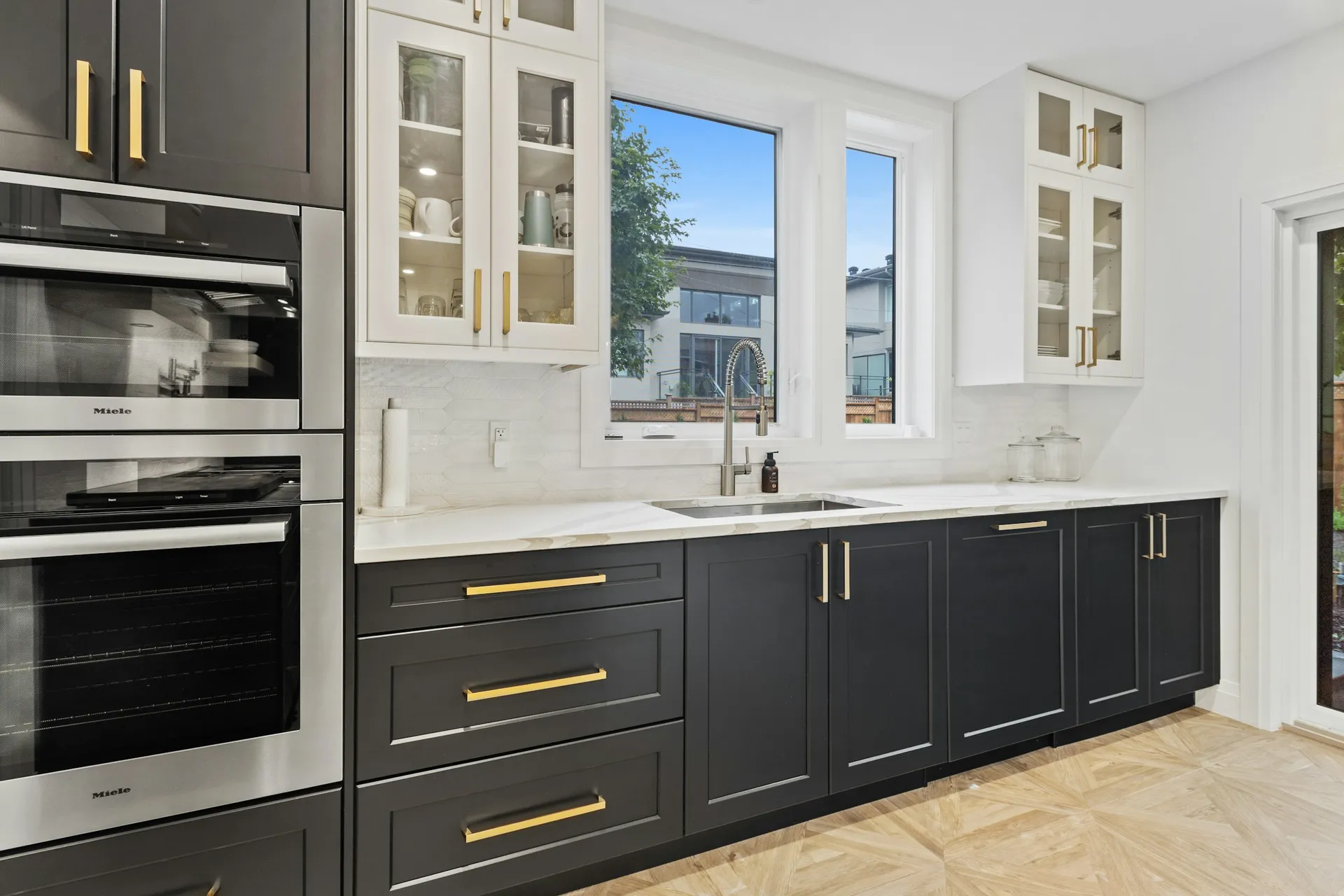
A stainless steel bowl fixed under a stone or solid countertop, with no rim on top. The most popular sink in Singapore kitchens with stone countertops.
Best for: Quartz, sintered stone and granite countertops
Pros
- No rim, so crumbs and water wipe straight into the bowl
- Clean, modern look
- Heat-resistant and easy to maintain
- Wide choice of sizes and bowl configurations
Cons
- Needs a solid countertop; not suitable for standard laminate
- Costlier to install, with adhesive and brackets under the top
- Water can seep into the cabinet if installation is poor
- Noisy and can show scratches and dents
Home & Decor notes that undermount sinks cost more to install because they are glued to the underside of the countertop and some need extra support inside the carcass, and that a poor installation can let water seep into the cabinet.
Ask for a thicker gauge (a lower number means thicker steel; Home & Decor suggests 16 or 18 gauge) and sound-deadening pads under the bowl. A brushed or satin finish hides scratches better than polished steel.
Make sure the cabinet below is waterproof: see kitchen cabinets.
Stainless steel top-mount sink
- Budget Budget
- Durability: good
- Upkeep: medium
A stainless steel sink dropped into a cut-out from above, with a rim resting on the countertop. Cheaper and easier to install, and the only practical choice with laminate tops.
Best for: Laminate countertops, rental flats and budget renovations
Pros
- Cheapest and simplest to install and replace
- Works with any countertop, including laminate
- The rim seals the cut-out edge from water
- Often comes with a built-in drainboard
Cons
- Visible rim collects grime along the sealant line
- You cannot wipe crumbs straight into the bowl
- Looks less streamlined
- Sealant needs replacing over time
Home & Decor describes the top-mount sink as dropped into the countertop with a rim holding it in place, easy and inexpensive to install, with the drawback that dirt can collect around the rim.
Top-mount sinks are the safer choice for laminate countertops, because the rim covers the cut-out edge where the wood-based core would otherwise be exposed to water. Ask your contractor to use a mould-resistant sanitary sealant and plan to reseal every few years.
A drainboard version is useful in small HDB kitchens without space for a dish rack.
Flush-mount or integrated sink
- Upper Upper
- Durability: good
- Upkeep: low
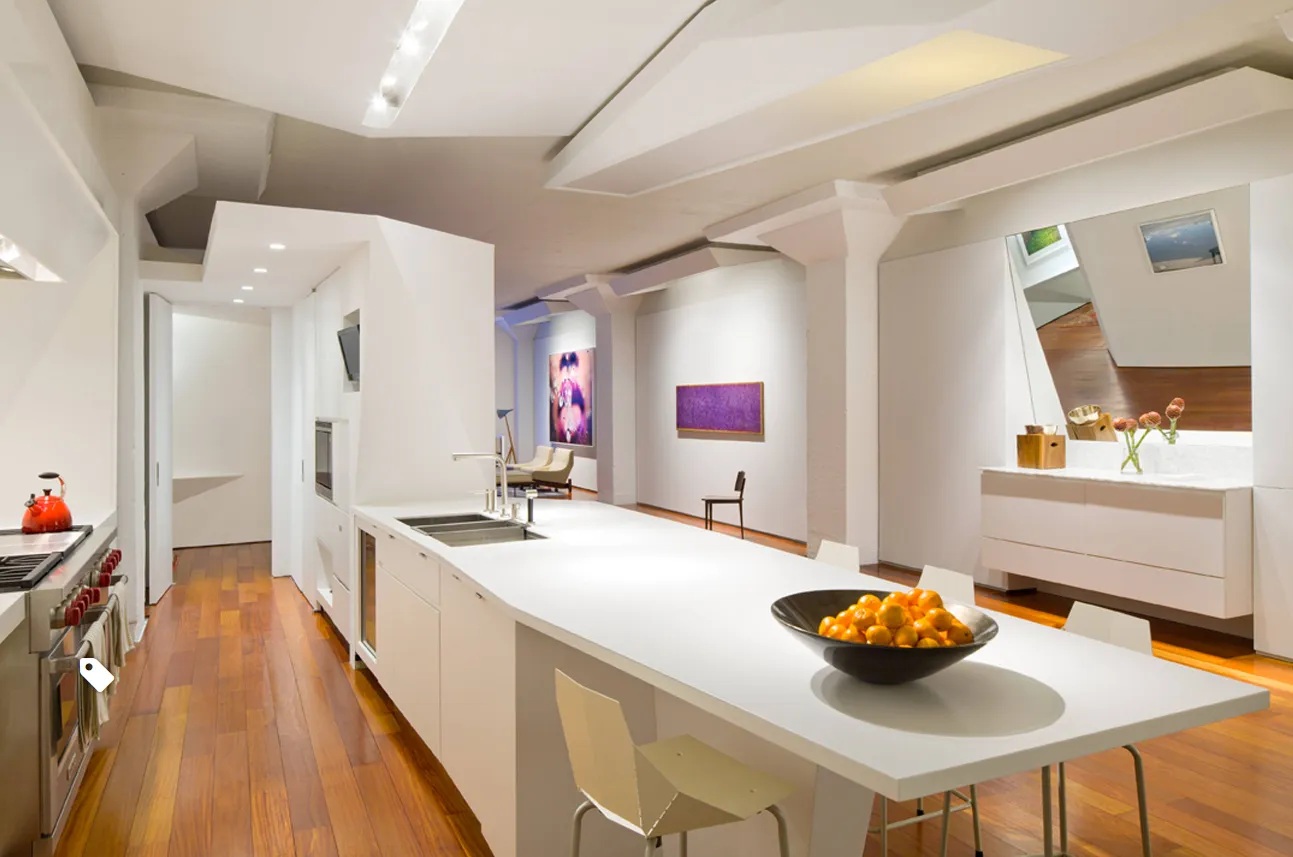
A sink set exactly level with the countertop, or made from the same material (solid surface, stainless steel, or stone) so there is no visible joint at all.
Best for: Minimalist kitchens and seamless solid surface or stainless worktops
Pros
- Seamless look with no lip or rim
- No joint where grime collects
- Integrated stainless or solid surface sinks remove a leak point
- Easy to wipe down
Cons
- Requires precise fabrication
- Integrated sinks share the countertop material weaknesses (e.g. solid surface scratches)
- Harder and costlier to replace on its own
- Fewer standard sizes
Integrated sinks are moulded or welded into the countertop. Solid surface countertops can be formed with an integrated sink of the same material, and stainless steel worktops can have the sink welded in. Flush-mount sinks sit in a rebated cut-out so the rim is level with the top.
The benefit is hygiene and looks. The trade-off is that a damaged sink usually means repairing or replacing part of the countertop. Ask what happens if the sink is damaged and whether it can be repaired in place.
These suit minimalist and futuristic designs.
Granite composite sink
- Upper Upper
- Durability: good
- Upkeep: medium
A sink moulded from granite or quartz particles in resin. Matt, stone-like and quiet, available in black, grey and white to match the countertop.
Best for: Kitchens that want a matt, colour-matched sink
Pros
- Quieter than stainless steel
- Resists scratches and dents
- Matt colours to match the countertop
- Heat-resistant to everyday hot water and pots
Cons
- Light colours can stain from turmeric, coffee and tea
- Hard water can leave limescale marks on dark colours
- Heavy dropped items can chip it
- Heavier, so needs good support
Granite composite is made from stone particles bound in acrylic resin and is described as durable, stain-resistant and heat-resistant. It is a softer, warmer look than stainless steel and much quieter when washing up.
In a curry-and-turmeric kitchen, darker colours hide staining better. Clean with a soft brush and mild detergent, and rinse after using strong-coloured spices. Avoid leaving bleach or harsh chemicals in the bowl.
Because these sinks are heavy, check that the cabinet and countertop cut-out can support the full weight when the sink is full of water.
Ceramic or fireclay sink
- Upper Upper
- Durability: good
- Upkeep: medium
Glazed ceramic sinks, including deep apron-front (farmhouse) styles. A classic look with a glossy, easy-clean surface.
Best for: Classic, country and colonial-style kitchens
Pros
- Glossy glaze resists stains and wipes clean
- Timeless look; apron fronts are a design feature
- Will not rust or dent
- Deep bowls fit large pots
Cons
- Can chip or crack if heavy pots are dropped
- Hard surface can break dropped glasses
- Heavy; needs a strong base cabinet
- Apron-front sinks need custom cabinetry
Ceramic is one of the popular sink materials in Singapore alongside stainless steel and granite composite, according to Home & Decor. Fireclay is fired at high temperature for a denser, tougher body.
A farmhouse sink suits British colonial, classic and rustic kitchens. Its exposed front means the cabinet below must be specially designed and the sink measured before carpentry is built.
Use a sink grid at the bottom to protect the glaze from heavy woks and pots.
Workstation sink
- Upper Upper
- Durability: excellent
- Upkeep: low
A larger stainless or composite sink with ledges for sliding accessories such as a chopping board, colander and drying rack. Turns the sink into a prep station.
Best for: Small kitchens with limited counter space
Pros
- Adds working surface over the bowl
- Accessories keep prep and washing in one place
- Large bowl fits woks and trays
- Useful in compact HDB kitchens
Cons
- Larger cut-out reduces counter space
- Accessories add cost and need storage
- Deep bowls can strain backs if the counter is low
- Harder to fit in narrow base cabinets
Workstation sinks are mostly undermount, so they need a stone or solid countertop and a base cabinet at least as wide as the sink plus its brackets. Check the cabinet width before choosing the sink.
They work well where counter space is tight: the chopping board slides over the bowl, peelings go straight down, and the drying rack doubles as a dish drainer.
Choose accessories in stainless steel or food-safe materials, and make sure they are dishwasher-safe if you use one.
Single-lever mixer tap
- Budget Budget
- Durability: good
- Upkeep: low
A deck-mounted mixer with one lever controlling flow and temperature. The standard kitchen tap in Singapore, available in fixed and swivel spouts.
Best for: Every kitchen; the safe default
Pros
- Simple, robust and easy to use with wet or oily hands
- Wide choice in all price ranges
- Easy to replace
- High-arc swivel spouts fit large pots
Cons
- Fixed spout cannot reach the corners of a large sink
- Cheap cartridges can drip after a few years
- Very high spouts can splash in shallow sinks
- Needs a hot water supply for the mixer function
Under PUB's Mandatory Water Efficiency Labelling Scheme, sink and bib taps and mixers rated 2 ticks have a flow rate of more than 4 and up to 6 litres per minute, and 3 ticks have 4 litres per minute or less. Since 1 April 2019 only 2-tick and above fittings are allowed for supply and installation. Look for the WELS label on the box.
If you do not have a hot water point in the kitchen, a mixer still works as a cold tap, but plan the hot water supply before the cabinets are built if you want it. HDB says water service works must be done by a PUB licensed plumber, though handymen can do simple plumbing works.
Pull-out or pull-down tap
- Mid-range Mid-range
- Durability: good
- Upkeep: medium
A mixer with a spray head on a hose that pulls out of the spout. Makes it easy to rinse the whole sink, fill pots and wash vegetables.
Best for: Large or double-bowl sinks and frequent cooks
Pros
- Reaches all corners of the sink
- Spray and stream modes for rinsing
- Fills pots on the counter beside the sink
- Easy to clean the sink itself
Cons
- Hose and weight need space in the cabinet below
- More moving parts to wear
- Spray heads can clog in hard water if not cleaned
- Docking magnets on cheap taps can weaken
Pull-out taps are covered by WELS like any other sink mixer, so check the tick rating on the label.
The hose runs down into the sink cabinet with a counterweight. Make sure nothing in the cabinet blocks it, especially if you are fitting a water filter, a bin pull-out or a dishwasher connection in the same cabinet.
Clean the spray nozzles regularly by rubbing them with your thumb or soaking the head in diluted vinegar, which removes mineral deposits.
Sensor or touch tap
- Upper Upper
- Durability: moderate
- Upkeep: medium
A mixer that turns on and off with a wave or a tap, powered by batteries or mains. Useful when your hands are covered in raw meat or dough.
Best for: Households that prioritise hygiene and convenience
Pros
- Hands-free operation keeps the tap clean
- Reduces water left running
- Can be combined with pull-out sprays
- Modern look
Cons
- Needs batteries or a power point under the sink
- Sensors can trigger accidentally
- More electronics to fail in a humid cabinet
- Costlier to repair
If the tap is mains-powered, you need a power point in the sink cabinet, positioned well away from water and installed by a licensed electrical worker. Battery models avoid this but need periodic battery changes.
Check that the tap has a manual override so you can still use it if the electronics fail, and that it carries a WELS label like any other kitchen mixer sold in Singapore.
These suit smart homes and families with young children.
Filter tap (three-way mixer)
- Upper Upper
- Durability: good
- Upkeep: medium
A mixer with a separate waterway for filtered drinking water, connected to an under-sink filter. Replaces a separate filter tap on the counter.
Best for: Households that drink filtered water and want a clean countertop
Pros
- One tap for hot, cold and filtered water
- Keeps filtered water separate from unfiltered
- Frees up counter space
- Works with many under-sink filter systems
Cons
- Filter cartridges need regular replacement
- Takes space in the sink cabinet
- More complex to install
- Filter compatibility varies between brands
PUB's tap water meets drinking water standards, so a filter is a preference, not a requirement. If you want one, a three-way tap avoids a second hole and a second tap on the counter.
Plan the under-sink space for the filter housing before the sink cabinet is built, and make sure cartridges can be changed without removing anything else. Note the cartridge replacement interval and cost before buying, as this is the ongoing cost.
Ask your plumber to fit an isolation valve so the filter can be serviced without shutting off water to the whole kitchen.
Single, double or one-and-a-half bowl?
- Single large bowl: best for woks, trays and big pots, and the most useful choice for most Singapore cooks. Pair with a dish rack or drainboard.
- Double bowl: lets you wash in one bowl and rinse or soak in the other, or keep raw meat and vegetables apart. Each bowl is smaller, so check that your wok fits.
- One-and-a-half bowl: a large main bowl and a small prep bowl, a good compromise in a 60cm-deep counter.
Measure your largest wok and pot before choosing. The bowl should fit them lying flat.
Mounting styles at a glance
- Top-mount: cheapest, works with laminate, rim collects grime.
- Undermount: clean look, needs a solid countertop and careful installation.
- Flush or integrated: seamless, needs precise fabrication and is harder to replace.
PUB water efficiency (WELS)
PUB's Mandatory Water Efficiency Labelling Scheme covers taps and mixers, among other fittings. For sink and bib taps and mixers:
- 2 ticks: more than 4 and up to 6 litres per minute
- 3 ticks: 4 litres per minute or less
From 1 April 2019, only fittings rated 2 ticks and above are allowed for supply and installation. PUB estimates that 2-tick and 3-tick sink taps save about 29% and 43% of water respectively compared with a 1-tick fitting. Buy only taps with the WELS label, especially when buying online from overseas sellers.
Singapore plumbing rules
- Licensed plumber: HDB says water service and sanitary works need a PUB licensed plumber. Handymen without a PUB licence can do simple plumbing works.
- Replacing a sink: HDB lists replacement of an existing sink with a stainless steel or enamelled type as not needing a permit.
- Moving the sink: the floor slab must not be tampered with. Sink waste pipes can be diverted within floor finishes but not embedded in the slab, and must be done by a PUB licensed plumber.
- Service yard: if you extend the kitchen into the yard, only one layer of 63mm hollow block or 80mm glass block may support the sink.
- Concealed pipes: in flats with concealed water pipes, HDB's pipe layout plans are only a guide, so take care when drilling.
What to ask before buying
- What steel gauge is the sink, and does it have sound-deadening pads?
- Does the sink fit inside the base cabinet with its brackets?
- Is the overflow and waste fitting included, and is it compatible with a dishwasher connection?
- What WELS rating is the tap, and what is the warranty on the cartridge?
- Is a hot water point available, and where will the filter or sensor power supply go?
Common mistakes
- Choosing an undermount sink for a laminate countertop.
- Picking a double-bowl sink too small for your wok.
- Forgetting the dishwasher or filter connections in the sink cabinet.
- Buying a tap without a WELS label from an overseas website.
- Using standard particleboard for the sink cabinet.
See our renovation timeline guide for when sink and tap choices need to be fixed.