Sanitaryware covers the fixed fittings in your bathroom: the toilet (WC), bidet, shower set, mixers and the water heater that feeds them. Basins and vanities have their own page, see bathroom vanities.
Two Singapore schemes shape what you can buy. PUB's Water Efficiency Labelling Scheme (WELS) rates taps, mixers, flushing cisterns and WC flush valves from 0 to 3 ticks, and its rating table states that from 1 April 2019 only 2-tick and above fittings in the mandatory scheme may be supplied and installed. NEA's energy label now covers household water heaters: NEA extended mandatory labelling and minimum efficiency standards to storage, instantaneous and heat pump water heaters from 1 April 2025.
The other big constraint is plumbing. Most HDB flats have floor drainage outlets for the WC, which suits floor-mounted toilets. Wall-hung and back-to-wall toilets need concealed cisterns and more work. Below we compare every common option, then explain the rules, who can install what, and how to keep the budget sensible.
Sanitaryware options at a glance
| Option | Cost | Durability | Upkeep | Best for |
|---|---|---|---|---|
| Two-piece (close-coupled) floor-mounted toilet | Budget | good | medium | Common bathrooms and budget renovations in HDB flats |
| One-piece floor-mounted toilet | Mid-range | excellent | low | Master bathrooms where easy cleaning matters |
| Back-to-wall toilet with concealed cistern | Upper | excellent | medium | Owners who want a clean look while keeping a floor-standing bowl |
| Wall-hung toilet with concealed cistern | Premium | excellent | medium | Condos, landed homes and full bathroom renovations |
| Bidet seat or smart toilet | Premium | good | medium | Owners who want hygiene and comfort features, including elderly users |
| Hand-held bidet spray | Budget | good | low | Every bathroom, as a budget hygiene option |
| Exposed rain shower set | Mid-range | good | medium | BTO flats during the 3-year restriction and quick upgrades |
| Thermostatic shower mixer | Upper | good | medium | Homes with children or elderly users, and condos with central hot water |
| Storage water heater | Mid-range | good | medium | Families with two or more bathrooms, or rain showers on one heater |
| Instant water heater | Budget | good | low | Single bathrooms and common bathrooms used briefly |
| Heat pump water heater | Premium | good | medium | Larger households, condos and landed homes with space for the unit |
Cost is relative within sanitaryware ($ budget to $$$$ premium). Actual prices depend on brand, size and workmanship, so compare itemised quotes.
Two-piece (close-coupled) floor-mounted toilet
- Budget Budget
- Durability: good
- Upkeep: medium
A bowl and a separate cistern bolted together, sitting on the floor. The standard, budget-friendly choice in many Singapore homes.
Best for: Common bathrooms and budget renovations in HDB flats
Pros
- Usually the cheapest toilet type
- Matches the floor outlet in most HDB flats
- A damaged cistern can be replaced without changing the bowl
- Easy to transport and install
Cons
- Joint between cistern and bowl collects dirt
- More crevices to clean
- Looks more basic
- Bolts and gaskets can loosen over time
Qanvast explains that most HDB flats have floor drainage outlets, so floor-mounted bowls typically come with an S-trap that connects straight to the floor. It notes that two-piece toilets are usually cheaper and easier to assemble, and a damaged cistern can be swapped without removing the bowl, but dirt can build up where cistern and bowl meet.
Before buying, measure the distance from the wall to the centre of the floor outlet so the bowl fits. Choose a dual-flush cistern with a WELS label of at least 2 ticks: PUB rates a dual-flush cistern 2 ticks at more than 3.5 to 4 litres full flush, and 3 ticks at 3.5 litres or less.
One-piece floor-mounted toilet
- Mid-range Mid-range
- Durability: excellent
- Upkeep: low
Bowl and cistern moulded as one seamless unit. Easier to clean and more streamlined than a two-piece.
Best for: Master bathrooms where easy cleaning matters
Pros
- Seamless body with fewer dirt traps
- Sleeker look
- Fits standard HDB floor outlets
- Generally sturdy
Cons
- Costs more than a two-piece
- Heavier and harder to carry up and install
- A cracked cistern means replacing the whole toilet
- Fewer budget models
Qanvast describes one-piece toilets as durable and easier to clean because they are a single seamless unit, but notes they cost more, are harder to transport, and a damaged cistern means replacing the whole toilet. It is a sensible upgrade in the master bathroom if you want a cleaner look without the extra plumbing work of a wall-hung toilet. Look for a rimless bowl and a quick-release seat to make cleaning easier.
Back-to-wall toilet with concealed cistern
- Upper Upper
- Durability: excellent
- Upkeep: medium
A floor-standing bowl pushed flush against a false wall or ledge that hides the cistern. Neat look without a wall-hung frame.
Best for: Owners who want a clean look while keeping a floor-standing bowl
Pros
- Hides the cistern and pipes
- No gap behind the bowl to clean
- Ledge above the cistern adds a shelf
- Cheaper than a full wall-hung frame in some cases
Cons
- Needs a false wall or ledge built
- Costlier installation
- Repairs to the cistern go through an access panel
- Usually needs a P-trap, which may not suit a floor outlet
Qanvast notes back-to-wall toilets are sleek and compact with a concealed cistern, but costlier to install and more complex to repair. Back-to-wall and wall-hung bowls usually come with a P-trap, designed for a wall outlet, so a flat with a floor outlet needs extra work. Qanvast also advises avoiding converting a trap from one type to another, and says installing concealed cisterns may require additional permits in HDB flats, so ask your contractor to check before you buy.
Wall-hung toilet with concealed cistern
- Premium Premium
- Durability: excellent
- Upkeep: medium
A bowl fixed to a steel frame inside a false wall, floating above the floor, with the cistern hidden behind. The most streamlined and easiest-to-mop option.
Best for: Condos, landed homes and full bathroom renovations
Pros
- Floor underneath is completely clear for mopping
- Bowl height can be set to suit users
- Hotel-like look
- Smaller visible footprint
Cons
- Highest installation cost
- Needs a false wall and a carrier frame
- Repairs and blockages can be harder to deal with
- May need HDB approval and is hard to do during the BTO 3-year restriction
Qanvast lists wall-hung toilets as easy to clean because the bowl is raised, and installable at non-standard heights, but costlier to install and harder to maintain if clogging happens. Wall-hung bowls use a P-trap, so a flat with a floor outlet needs extra plumbing work.
PUB treats installing, changing or relocating toilet bowls as sanitary plumbing work for a PUB licensed plumber. In a new BTO flat, building the false wall usually means working on the bathroom finishes, which HDB restricts for 3 years. Check access: the flush plate should come off so the cistern valve can be serviced.
Bidet seat or smart toilet
- Premium Premium
- Durability: good
- Upkeep: medium
An electric seat with a built-in washing nozzle (often called a washlet), or a fully integrated smart toilet with auto flush, heated seat and dryer.
Best for: Owners who want hygiene and comfort features, including elderly users
Pros
- Hands-free washing without a separate spray
- Features like warm water, dryer and auto lid
- Bidet seats can fit many existing bowls
- Comfortable for elderly or less mobile users
Cons
- Needs a power point near the WC
- Electronics can fail in humid bathrooms
- Costs much more than a standard seat
- Repairs depend on parts availability
Plan the power point early: electrical work must be done by an EMA licensed electrical worker, and the socket should be placed where it stays dry, away from the shower. A bidet seat replaces the existing seat on many standard bowls, so measure the bowl shape and length first.
Integrated smart toilets are a bigger purchase. Check that a WELS label is shown for the flushing part and ask about local servicing and spare parts. Some brands sell antibacterial glazes and quick-release seats; treat hygiene claims as the brand's own and compare warranties instead.
Hand-held bidet spray
- Budget Budget
- Durability: good
- Upkeep: low
A small spray head on a hose next to the WC, fed from a stop valve. A very common, low-cost fitting in Singapore bathrooms.
Best for: Every bathroom, as a budget hygiene option
Pros
- Very low cost
- Works with any toilet
- Simple to replace
- No electricity needed
Cons
- Can drip and wet the floor
- Hose and head wear out over time
- Water pressure can be strong
- Adds clutter beside the WC
PUB lists replacing or removing a shower hose or showerhead, and replacing or removing any tap or mixer, as simple plumbing work that does not need a PUB licensed plumber. Swapping a worn bidet spray is usually that kind of job. Choose a spray with a holder that keeps it off the floor, and turn off the stop valve if the hose starts leaking.
Exposed rain shower set
- Mid-range Mid-range
- Durability: good
- Upkeep: medium
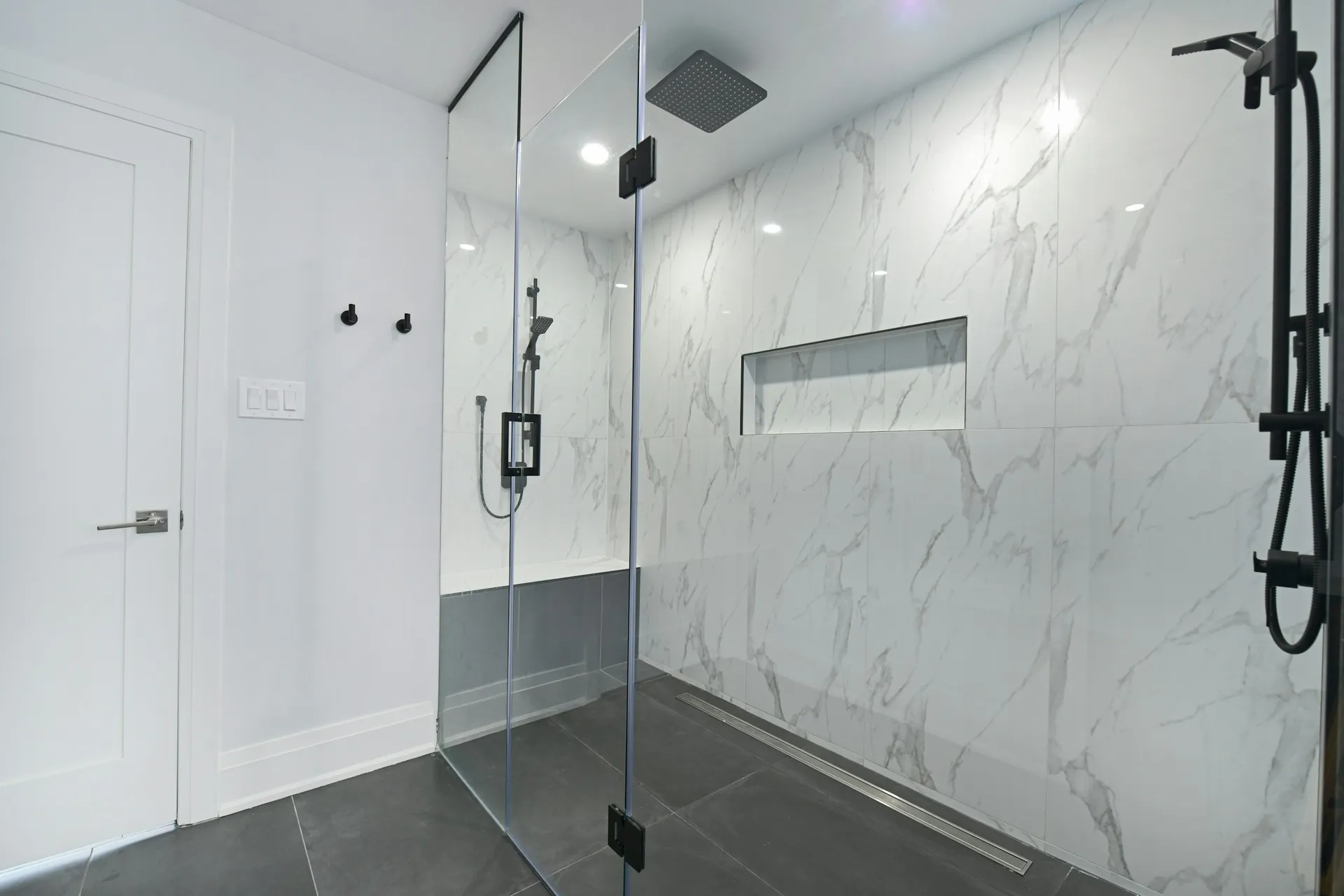
A shower column with an overhead rain showerhead, a hand shower and a wall mixer, all mounted on the wall surface. Easy to fit without hacking tiles.
Best for: BTO flats during the 3-year restriction and quick upgrades
Pros
- No wall hacking needed
- Large overhead shower feels luxurious
- Hand shower for cleaning and children
- Easy to replace later
Cons
- Column and pipes are visible
- Large heads can drip after use
- Nozzles clog without cleaning
- Overhead flow can feel weak with low pressure
Shower taps and mixers are under PUB's mandatory WELS: a 2-tick shower mixer flows at more than 5 and up to 7 litres a minute, and a 3-tick one at 5 litres or less. Showerheads are rated under PUB's voluntary scheme, where 2 ticks is more than 5 to 7 litres a minute and 3 ticks is 5 litres or less.
HDB notes that taps and shower systems come with water regulators to save water, and that flow may slow with prolonged use, so clean or service them if pressure drops. Measure the ceiling and window heights before choosing the column, and check the overhead head clears tall users.
Thermostatic shower mixer
- Upper Upper
- Durability: good
- Upkeep: medium
A mixer that holds the water at a set temperature even when pressure changes elsewhere in the home. Available as exposed or concealed units.
Best for: Homes with children or elderly users, and condos with central hot water
Pros
- Steady temperature, fewer sudden hot or cold bursts
- Safety stop helps prevent scalding
- Comfortable for long showers
- Concealed versions look very clean
Cons
- Costs more than a standard mixer
- Cartridges need servicing, especially with debris in the water
- Concealed versions need wall hacking
- Needs compatible hot water supply pressure
A thermostatic mixer suits households where small children or elderly family members shower, because it reduces temperature swings. Ask whether your water heater type and pressure suit the mixer; some instant heaters and thermostatic mixers do not work well together.
Concealed mixers (with only the handle and plate on the wall) need the wall chased for pipes, so they belong in a full bathroom renovation. In a new BTO flat, HDB's 3-year restriction on removing bathroom finishes generally rules them out until the period ends. Like all shower mixers, it should carry a WELS label of at least 2 ticks.
Storage water heater
- Mid-range Mid-range
- Durability: good
- Upkeep: medium
An insulated tank that heats and stores water, ready to supply several points at once, including rain showers. Common in HDB flats.
Best for: Families with two or more bathrooms, or rain showers on one heater
Pros
- Supplies several showers at once
- Good flow for rain showers
- Stable temperature
- Widely available in many sizes
Cons
- Takes time to heat up and can run out
- Keeps heat in the tank, so standby energy losses
- Tank needs space, often above the false ceiling
- Heavy, so mounting must be strong
Qanvast describes a storage water heater as one that holds a set amount of water in its tank at a chosen temperature. NEA's energy label for water heaters uses a 5-tick scale based on the Uniform Energy Factor under Singapore Standard 646, and NEA says switching from a 1-tick to a 5-tick model can save up to $115 a year (at an electricity tariff of $0.27 per kWh). Compare tick ratings and tank size before buying.
Have a PUB licensed plumber connect it to the water supply, and an EMA licensed electrical worker handle the electrical point.
Instant water heater
- Budget Budget
- Durability: good
- Upkeep: low
A compact unit that heats water as it flows through, usually serving one shower. The default in many smaller bathrooms.
Best for: Single bathrooms and common bathrooms used briefly
Pros
- Low upfront cost
- Small and easy to mount
- Hot water without waiting for a tank
- No tank to run empty
Cons
- Serves one point at a time
- Flow is limited, weak for large rain showers
- High power draw while running
- Temperature dips if flow is increased
Qanvast explains that an instant heater uses a heating element to warm water as it passes through. That makes it a good match for a hand shower or small showerhead, but often a poor match for a large rain shower, which needs more flow than one unit can heat.
PUB lists replacing or removing the pipe between a stop valve and an instantaneous water heater as simple plumbing work. Installation of the heater itself and its electrical supply should be left to licensed professionals. Instant heaters are also covered by NEA's mandatory energy label from 1 April 2025.
Heat pump water heater
- Premium Premium
- Durability: good
- Upkeep: medium
A storage heater that uses a heat pump (like an air-conditioner in reverse) to warm water, using less electricity than a standard element heater.
Best for: Larger households, condos and landed homes with space for the unit
Pros
- More energy-efficient than standard electric heaters
- Lower running costs over time
- Can supply several bathrooms
- Covered by NEA's energy label, so easy to compare
Cons
- Highest upfront cost
- Needs space and airflow for the unit
- Slower to reheat a full tank
- Fewer installers than for standard heaters
NEA's mandatory labelling, which started on 1 April 2025, covers heat pump water heaters alongside storage and instantaneous types, so you can compare all three on the same tick scale. NEA notes water heaters are the third most energy-intensive household appliance, making up about 10% of a typical household's energy use, which is why efficiency is worth weighing against the higher upfront price.
Some homes, especially those with a piped town gas supply, also choose gas water heaters. HDB has separate guidelines for gas-related works, so check with your contractor before choosing one.
How to choose sanitaryware
Start with what the plumbing allows, then decide on looks:
- Check your WC outlet. Qanvast explains that S-traps connect to a floor outlet and P-traps to a wall outlet. Most HDB flats have floor outlets, which suit floor-mounted toilets. Wall-hung and back-to-wall bowls usually need a P-trap, so they need extra work in those flats.
- Measure the trap distance. The gap from the finished wall to the centre of the floor outlet decides which bowls fit. Bring this measurement to the showroom.
- Decide what you will hide. Concealed cisterns and concealed mixers look cleaner but need false walls or wall chasing. In a new BTO flat, HDB's 3-year restriction on removing bathroom finishes generally limits you to exposed fittings until the period ends.
- Match the shower to the heater. A large rain shower needs a storage or heat pump heater; an instant heater suits a standard hand shower.
- Check labels. Look for the WELS label on taps, mixers and cisterns, and the NEA energy label on water heaters.
PUB water efficiency labels (WELS)
PUB's WELS rates water fittings from 0 to 3 ticks. Under the mandatory scheme, PUB lists taps and mixers, dual-flush low-capacity flushing cisterns, WC flush valves, urinal flush valves and waterless urinals. PUB's rating table states that from 1 April 2019, only 2-tick and above mandatory WELS fittings may be supplied and installed. PUB's thresholds:
- Shower taps and mixers: 2 ticks above 5 to 7 litres a minute; 3 ticks at 5 litres or less.
- Basin taps and mixers: 2 ticks above 2 to 4 litres a minute; 3 ticks at 2 litres or less.
- Dual-flush cisterns: 2 ticks above 3.5 to 4 litres full flush; 3 ticks at 3.5 litres or less.
- WC flush valves: 2 ticks above 3.5 to 4 litres per flush; 3 ticks at 3.5 litres or less.
- Showerheads: rated under the voluntary scheme, with 3 ticks at 5 litres a minute or less.
PUB advises consumers to buy only water fittings that bear the WELS label, and warns that non-WELS products may affect water quality and reliability. If a tap or toilet you like is sold without a label, ask why.
NEA energy label for water heaters
From 1 April 2025, NEA extended the Mandatory Energy Labelling Scheme and Minimum Energy Performance Standards to household water heaters: storage, instantaneous and heat pump types. Models are rated on a 5-tick scale. NEA estimates you can save up to $115 a year by switching from a 1-tick to a 5-tick model (at $0.27 per kWh). Compare ticks the same way you would for an air-conditioner.
Who can do the work
- PUB licensed plumber: PUB says regulated water service and sanitary plumbing works must be done by a PUB licensed plumber, and since 1 April 2018 it is an offence to engage an unlicensed plumber for them. PUB treats installing, changing or relocating toilet bowls as sanitary plumbing work.
- Simple works: PUB allows some jobs without a licensed plumber, including replacing any tap or mixer, replacing a shower hose or showerhead, replacing a cistern's flushing mechanism, clearing a WC blockage, and installing or replacing a washbasin or sink.
- Electrical: bidet seats, heaters and lighted mirrors need power points installed by an EMA licensed electrical worker.
- HDB: HDB has separate guidelines on replacing squat or pedestal pans, piping works and gas works. Your contractor should check them and handle any permits. See our HDB renovation permit guide.
Common mistakes
- Buying a wall-hung toilet before checking the outlet position.
- Choosing a big rain shower but keeping a small instant heater.
- Forgetting a dry, safe power point for a bidet seat.
- Planning a concealed mixer in a new BTO bathroom during the 3-year restriction.
- Buying unlabelled fittings online that cannot legally be installed.
How it affects your budget
Floor-mounted toilets, exposed shower sets and instant heaters are the budget route. Concealed cisterns, wall-hung frames, thermostatic concealed mixers, smart toilets and heat pump heaters add both product and installation cost. Qanvast suggests budgeting upwards of $2,000 for bathroom fittings and appliances on top of renovation works (an indicative 2024 estimate), and that figure climbs quickly with premium choices.
How JIAHOME can help
We specify every fitting in the design, including trap type, heater and power points, and list them in a quotation without prices so any contractor can price the same scope. See our services or packages.