HDB balcony ideas have to start with the rules, because they decide what is possible. HDB's guidelines treat balconies on DBSS flats and on flats handed over from 1 July 2007 as open balconies: you cannot install windows, full-height sliding doors or glass panels to enclose them. Blinds are allowed with conditions. Some older flats have balconies where windows can be installed on the parapet with a permit. Condo balconies follow URA's rules and your MCST's by-laws instead.
Within those limits, a balcony is a small outdoor room that takes rain, sun and wind. Floors need grip and drainage, furniture has to survive humidity and UV, and anything electrical must be rated for outdoor use. A good design keeps the balcony usable in the afternoon sun without blocking the airflow the rules require.
This guide covers balcony layouts and finishes, blinds that meet HDB's conditions, furniture and plants, and the rules for HDB and condo balconies, with notes on BTO balcony ideas where they differ.
Balcony ideas
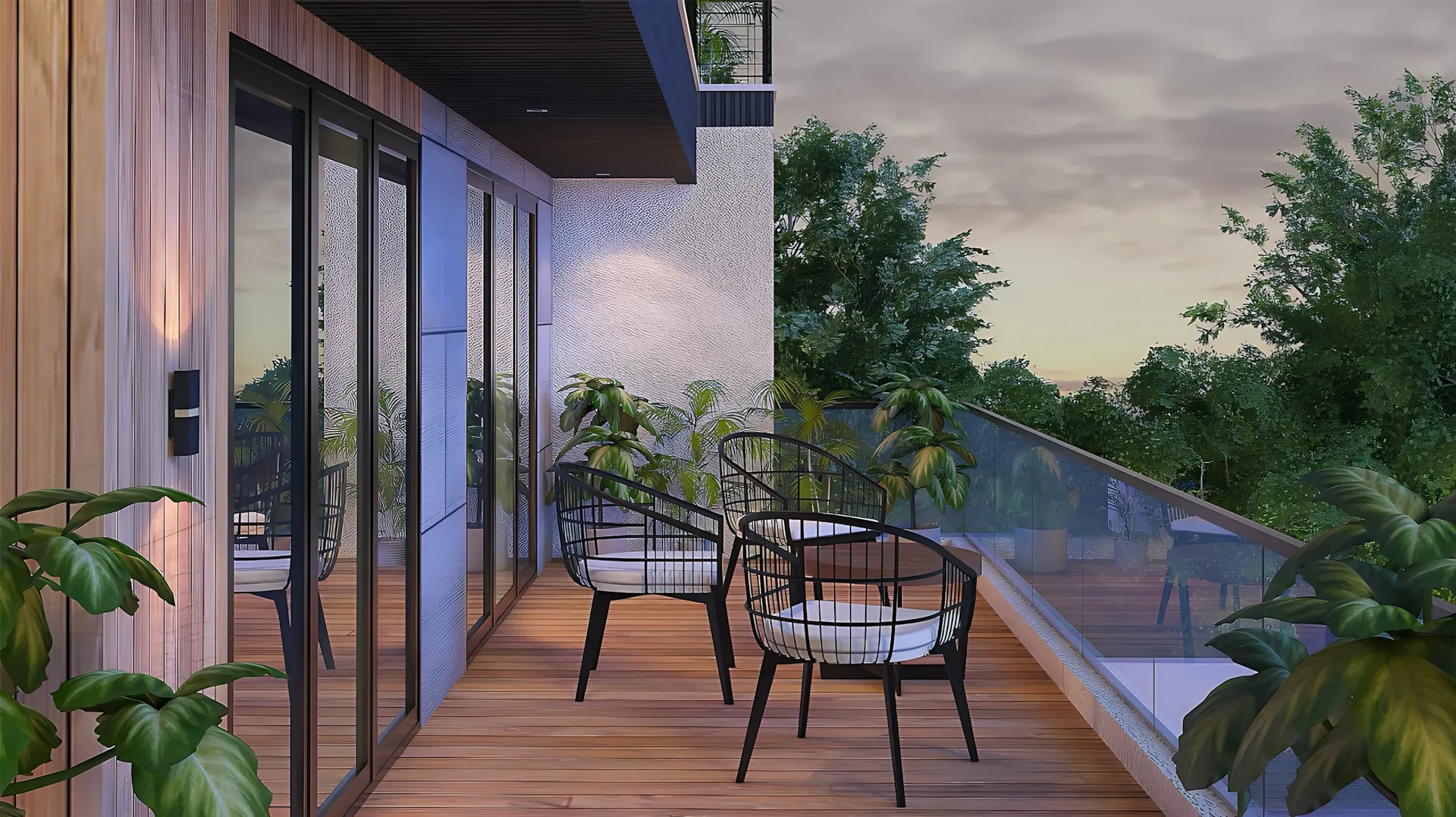
Photo: Hardik Panchal on Unsplash 01Choose a floor that grips when wet
Rain blows in, plants are watered and the floor stays damp. Use a textured or matte porcelain tile rated for outdoor use, in a light colour that stays cooler in the sun. Keep the fall towards the floor trap and do not block it with planters. If you replace the floor, HDB requires pre-packed waterproofing screed for open balconies, with a waterproofing membrane around the sanitary stacks. Wood-look porcelain gives a deck look without timber maintenance.
02Fit outdoor blinds that let air through
For open balconies where permanent enclosure is not allowed, HDB lets you install blinds if they can be drawn open or retracted fully, are made of porous material that lets light and air through, and keep the balcony naturally ventilated even when fully closed. Glass, PVC or any material that completely blocks sun, rain and wind is not allowed, and the whole system must stay within your unit and not touch the safety railing. Outdoor mesh roller blinds and bamboo chicks fit these rules well.
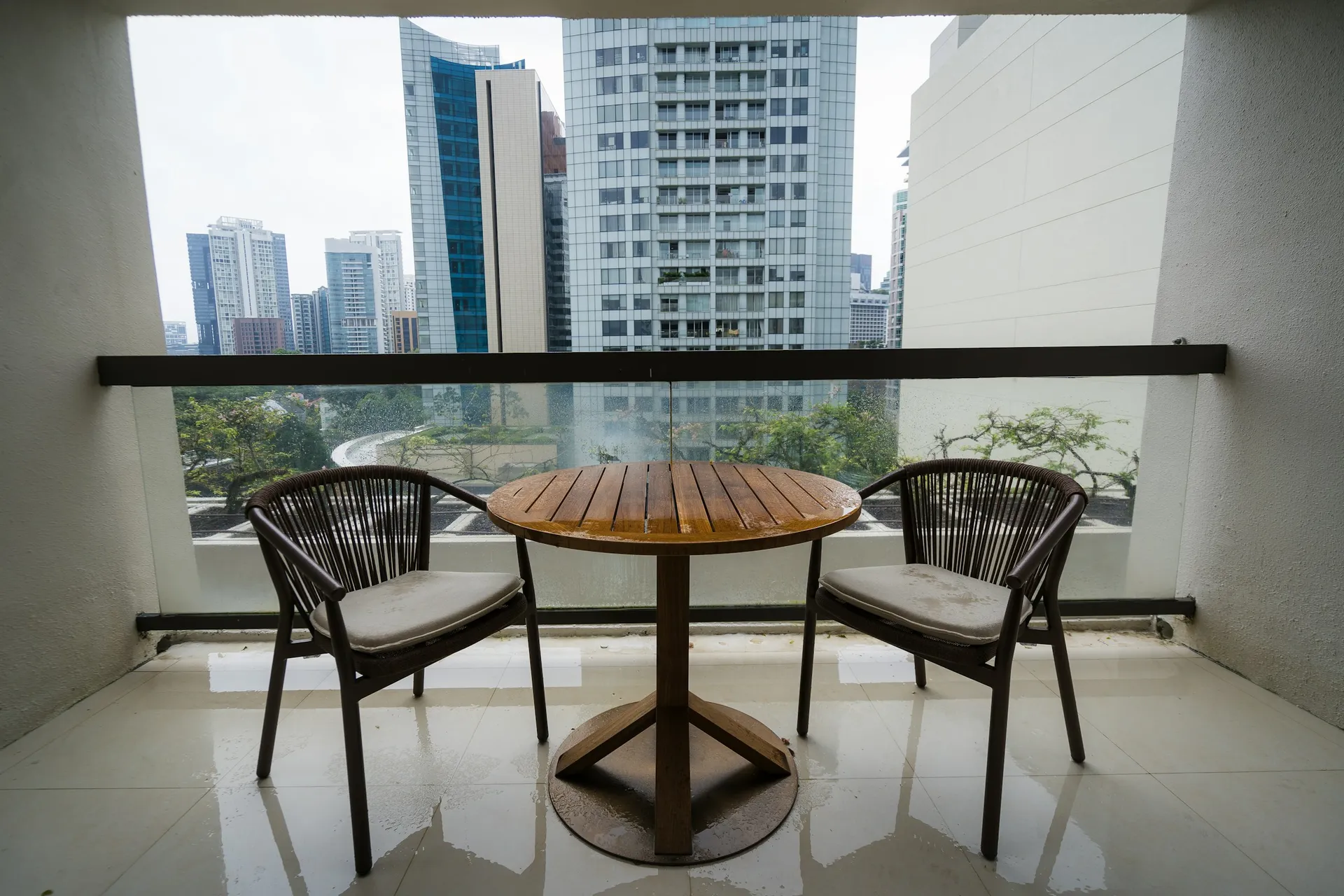
Photo: Frugal Flyer on Unsplash 03Furnish for sun and humidity
Powder-coated aluminium, teak and synthetic rattan cope with Singapore's heat and rain better than painted steel or untreated timber. Cushions should use outdoor fabric with quick-dry foam, stored indoors when it rains. In a narrow HDB balcony, a bistro table with two folding chairs or a slim bench along the wall keeps the walkway clear. Measure the sliding door track so furniture does not block the door from opening fully.
04Plant for weight and drainage
Planters full of wet soil are heavy. HDB does not allow floor slabs to be loaded beyond 150kg per square metre, so spread large pots across the floor rather than grouping them in one corner, and choose lightweight planters. Raise pots on feet so water can drain to the floor trap. Climbing plants on a freestanding trellis add shade without fixings into the facade. If your flat has a planter box, HDB does not allow a change of use or permanent sealing of it.
05Light it for evenings
A balcony used after work needs soft light, not a single bright bulb. Use outdoor-rated wall lights on the inside wall, warm LED strips under a bench or a few solar lanterns. Any new power point or light on the balcony must be wired by an EMA licensed electrical worker, and fittings should have a suitable ingress protection rating for rain. Avoid lights that shine into neighbours' windows.
06Add a ceiling fan for airflow
On still afternoons, a balcony can feel hotter than the living room. An outdoor-rated DC ceiling fan moves air quietly and uses little power. Check the ceiling height and whether there is a power point or wiring route first, and fix the fan to the concrete slab rather than to a false ceiling. In condos, check your MCST's rules before fixing anything to the ceiling.
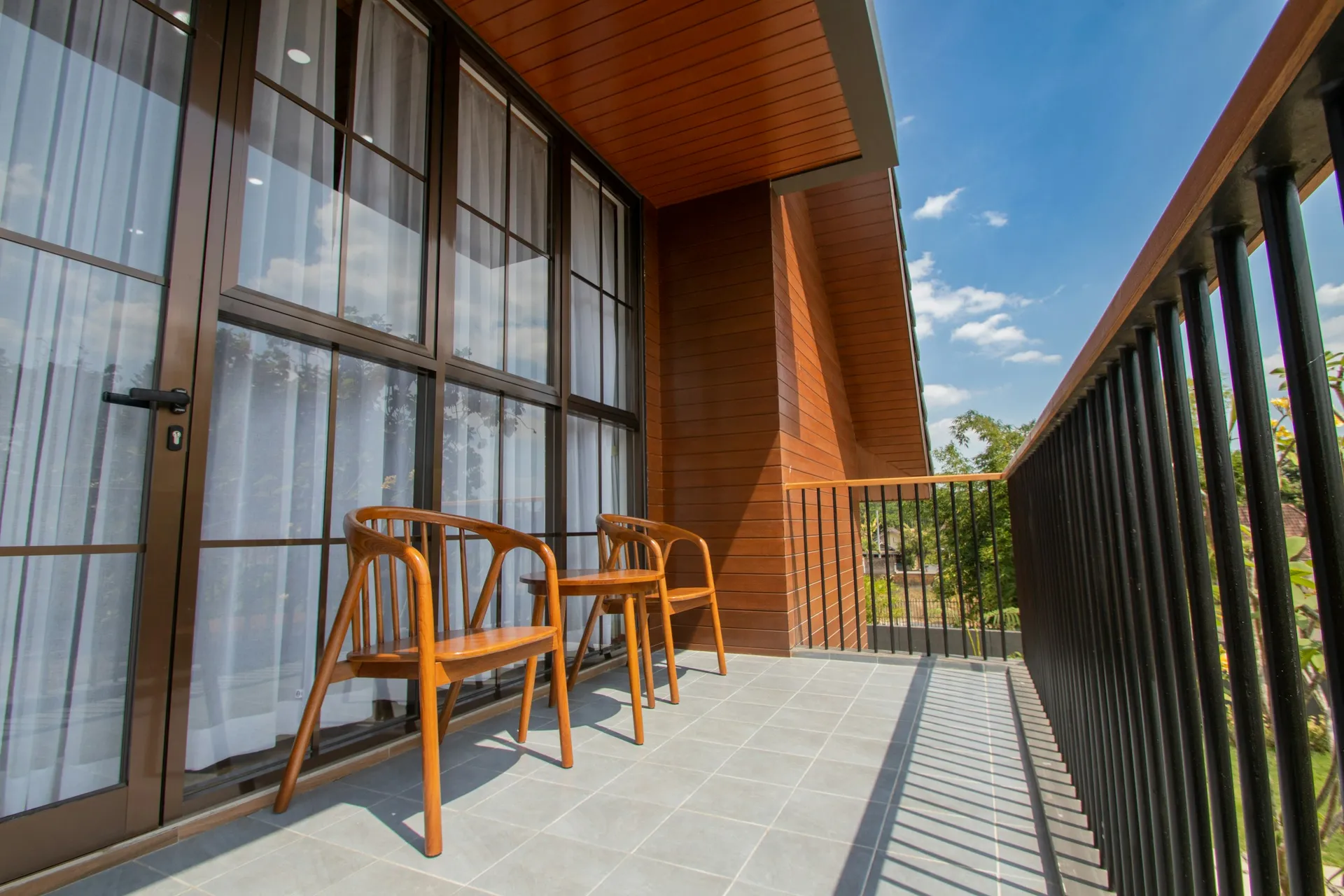
Photo: Budi Puspa Wijaya on Unsplash 07Keep the doors as HDB intended
On balconies where windows cannot be installed, HDB does not allow you to relocate the balcony sliding door, or remove or replace it with a different door from the one originally provided. Focus your budget on the floor, blinds and furniture instead. A non-reflective window film on the existing sliding door glass can cut heat and glare; HDB requires films to have no more than 20% reflectance.
08Enclose older balconies only with approval
For flats where window installation on the balcony parapet is allowed, HDB requires a renovation permit and a BCA Approved Window Contractor listed with HDB. Casement panels must be 500mm to 700mm wide and sliding panels 500mm to 1,200mm wide. Do not remove the safety railing without following HDB's conditions, including a parapet height of at least 1,000mm from finished floor level. Check your flat's specific guidelines on MyHDB first.
What we would use in a balcony
| Part of the room | Our pick | Also good |
|---|---|---|
| Floor | Homogeneous (full-body porcelain) tiles with a textured outdoor finish | Terrazzo tiles, or outdoor-rated glazed porcelain tiles on a tighter budget |
| Blinds | Roller blinds in a porous outdoor mesh fabric | Bamboo chicks, or aluminium Venetian blinds where the rules for your flat allow |
| Glass doors | Window films | Day curtains (sheers) inside the living room |
| Lighting | Wall lights and sconces (outdoor-rated) | Floor and table lamps, such as rechargeable outdoor lanterns |
| Airflow | DC ceiling fans (outdoor-rated) | A portable outdoor fan with no fixed wiring |
| Walls | Specialty paints (anti-mould, washable, low-VOC) | Feature wall tiles on the inside wall for a hard-wearing finish |
| Storage | Aluminium cabinets | Stainless steel cabinets, or a weatherproof storage bench |
| Ceiling | No false ceiling (painted slab with surface trunking) | Aluminium strip and panel ceilings for a finished look that resists moisture |
Floor
Homogeneous (full-body porcelain) tiles with a textured outdoor finish
Full-body porcelain absorbs very little water, does not fade in the sun and keeps its colour if chipped. A textured or anti-slip finish gives grip when rain blows in. Choose a light colour to keep the surface cooler, and a wood-look or stone-look face if you want a softer feel.
Also good: Terrazzo tiles, or outdoor-rated glazed porcelain tiles on a tighter budget
Compare every tiles optionBlinds
Roller blinds in a porous outdoor mesh fabric
An outdoor mesh roller blind cuts afternoon sun and glare while letting air and light through, which HDB requires for open balconies. It retracts fully into a compact cassette and the fabric resists mould better than indoor blinds. See our [curtains vs blinds](/curtains-vs-blinds) comparison for indoor rooms.
Also good: Bamboo chicks, or aluminium Venetian blinds where the rules for your flat allow
Compare every window treatments optionGlass doors
Window films
A film on the balcony sliding door glass cuts heat and UV entering the living room without changing the door itself. HDB allows film on existing windows and balcony doors with no permit, as long as it is non-reflective or has no more than 20% reflectance.
Also good: Day curtains (sheers) inside the living room
Compare every window treatments optionLighting
Wall lights and sconces (outdoor-rated)
Wall lights on the inside wall give a soft, even glow without drilling into the ceiling slab or the facade. Choose fittings rated for rain and humidity, with warm white LEDs for evenings. Place them where they do not shine into neighbours' windows.
Also good: Floor and table lamps, such as rechargeable outdoor lanterns
Compare every lighting optionAirflow
DC ceiling fans (outdoor-rated)
A balcony cannot be air-conditioned, but a DC fan makes it comfortable on still afternoons and evenings. DC motors are quiet and efficient. Choose a model rated for damp locations, and fix it to the concrete slab with the wiring done by a licensed electrical worker.
Also good: A portable outdoor fan with no fixed wiring
Compare every aircon systems optionWalls
Specialty paints (anti-mould, washable, low-VOC)
Balcony walls take rain splash and humidity, and mould shows up quickly on standard paint. An exterior-grade anti-mould paint in a light colour keeps the walls clean and cool. HDB does not allow painting the external parts of the building, so only paint the walls within your unit.
Also good: Feature wall tiles on the inside wall for a hard-wearing finish
Compare every wall finishes optionStorage
Aluminium cabinets
A low cabinet stores cushions, gardening tools and the hose without rotting or swelling in damp air. Aluminium is rust-resistant and can take a powder-coated or wood-look finish. Keep it low so it does not block light, and raise it on legs so water drains underneath.
Also good: Stainless steel cabinets, or a weatherproof storage bench
Compare every kitchen cabinets optionCeiling
No false ceiling (painted slab with surface trunking)
Most HDB balconies do not need a false ceiling, and a bare slab is easier to inspect and repaint. Run any wiring for a fan or light in neat surface trunking. If you want a finished ceiling, it must use non-combustible materials and an outdoor-suitable product.
Also good: Aluminium strip and panel ceilings for a finished look that resists moisture
Compare every false ceilings option
HDB balcony rules
HDB's rules depend on when your flat was handed over and its design. Check the guidelines for your flat on MyHDB before you plan anything. The key points from HDB's window works and building works guidelines:
- Open balconies (DBSS flats and flats handed over from 1 July 2007): windows, full-height sliding doors or glass panels cannot be installed at the balcony or planter box. Partial or total enclosure of open balconies is not allowed.
- Blinds on open balconies: allowed without a permit if they can be drawn open or retracted fully, are porous and permeable to light and air, keep the balcony naturally ventilated when closed, and stay within your unit without touching the safety railing. Glass, PVC or any material that completely blocks sun, rain and wind is not allowed.
- Older balconies where windows are allowed: installing or replacing windows on the parapet needs a permit and a BCA Approved Window Contractor listed with HDB. Casement panels must be 500mm to 700mm wide; sliding panels 500mm to 1,200mm.
- Balcony doors: where windows are not allowed, you cannot relocate the balcony sliding door or replace it with a different one.
- Railings: replacing or removing a railing on top of the parapet is allowed under conditions, including a parapet at least 1,000mm high from finished floor level.
- Films: non-reflective or no more than 20% reflectance.
- Awnings: HDB allows awnings in specific cases only, such as retractable canvas awnings within the balcony of a double-storey executive maisonette, and awnings at open-to-sky balconies of topmost units with a permit. Fixtures outside the flat are not allowed.
Condo balconies and MCST by-laws
URA says condo balconies are meant to be semi-outdoor spaces and must not be enclosed with walls or glass panels. Balcony screens may be allowed in existing developments if they can be drawn open or retracted fully and keep the balcony naturally ventilated at all times, and owners should follow the design guidelines set by their MCST. URA treats blinds as furnishing that needs no planning permission. Whether you can hang laundry, fix a fan or change the floor is up to your MCST's by-laws and renovation guidelines, so ask the management office first. Our post on condo renovation rules covers the process.
Flooring and waterproofing
If you replace the balcony floor in an HDB flat, the total thickness of new finishes and screed must not exceed 50mm, and HDB requires pre-packed waterproofing screed for open balconies, with a membrane upturned at least 150mm around the sanitary stacks within a 400mm radius. Topping up a balcony floor with lightweight screed needs a permit. Keep the fall to the floor trap so water does not flow towards the living room, and use a UPVC floor trap grating with a long collar. Compare outdoor-suitable options on our tiles page.
Layout and furniture
Most HDB balconies are long and narrow. Keep a clear path from the sliding door, put seating against the side wall and use the far end for plants or a drying spot. Folding furniture lets you clear the space for a party. Leave the floor trap uncovered and avoid heavy built-in planters.
Blinds and shade
For sun control, outdoor mesh roller blinds and bamboo chicks are the usual choices on HDB balconies because they let air through. Compare fabrics and mechanisms on our window treatments page, and see curtains vs blinds for the rooms indoors.
Common mistakes
- Installing glass or PVC "blinds" that block wind and rain, which HDB does not allow on open balconies.
- Grouping heavy planters in one corner.
- Blocking the floor trap with decking or pots.
- Using indoor lights and sockets outdoors.
- Assuming condo rules match HDB rules.
Checklist
- Check your flat's balcony type and specific guidelines on MyHDB, or your MCST's by-laws for a condo.
- Choose a textured outdoor tile and keep the fall to the floor trap.
- Pick porous, fully retractable blinds.
- Plan outdoor-rated lighting and power with a licensed electrician.
- Choose weather-resistant furniture and lightweight planters.
See our living room and service yard guides for the spaces next door.