
Homeowner guide
Low-maintenance materials: choosing finishes that are easy to keep clean
Low-maintenance materials hide everyday marks, have few joints and ledges for dust and grime, and cope with humidity without special care. There is no single right answer: what suits you depends on who lives in the home, who cleans it and what you are willing to trade for looks. This guide goes surface by surface, then by lifestyle, so you can decide.
- Floors, walls, kitchen, bathroom and fabrics
- For no-helper homes, kids, pets and cooks
- Links to every material option
The short answer
What makes a material low-maintenance in a Singapore home?
Short answer: a low-maintenance material hides everyday marks, has few joints, grooves and ledges for dust to settle in, and copes with humidity without sealing or special cleaners. In most homes the cleaning effort comes from a few details, such as grout lines, open ledges, glossy doors and fabric, more than from the main material.
Singapore makes this harder. The Meteorological Service Singapore puts the mean annual relative humidity at around 82%, and on dry days it rises above 90% just before sunrise (MSS). Damp air feeds mould on grout and sealant and suits dust mites: the American Lung Association calls humidity the biggest factor in dust mite levels at home (ALA).
Four questions to ask about any finish
- Will it show marks? Gloss shows fingerprints and water spots; very light or very dark plain colours show dust and hair. Mid-tones, grain and soft speckles hide more.
- How many joints, grooves and ledges? Every grout line, fluted groove, open shelf and cove trough collects dust.
- Does it absorb water or stains? Porous materials such as marble need sealing and quick wiping.
- Can you clean it with a damp cloth and mild detergent? Special cleaners, specialists or re-oiling all count as upkeep.
Low maintenance is a trade-off against looks, feel and cost, and a high-upkeep material in one place you love, such as a timber dining table, can be worth it. The point is to choose the extra work on purpose. For making finishes work together, see how to choose materials that go together.
Floors
What flooring is easiest to keep clean?
Short answer: for most HDB flats and condos, matte or lightly textured porcelain tiles and good-quality SPC vinyl are the usual easy-care choices: both take daily mopping and need no sealing. Marble, solid timber and polished surfaces need more care, so lean towards them where you are happy to give it.
How the common options compare for upkeep
- Porcelain and homogeneous tiles: resist water and stains; the work is in the grout. Houzz Singapore notes that large floor tiles look more seamless because there are fewer grout lines (Houzz). Polished tiles show smears and are slippery when wet; matte finishes are more forgiving.
- SPC vinyl: no grout, and it copes with mopping. Wipe spills before they reach the joints, and use doormats, because grit scratches the wear layer.
- Laminate: scratch-resistant, but its core dislikes water at the joints, so it suits households that mop with a well-wrung mop.
- Timber, parquet and marble: age with character and can be refinished, but need sealing, oiling or polishing over the years.
- Microcement and epoxy: seamless, but the protective sealer wears along busy paths and needs renewing.
Every option is compared on our flooring and tiles pages, and the most common choice is covered in vinyl flooring vs tiles.
Colour, pattern and robot vacuums
A plain white or charcoal floor shows every hair and footprint; light-to-mid wood tones, greige stone looks and soft speckles hide daily dust far better. If you have a pet, hold the sample next to its fur. If you rely on a robot vacuum, keep thresholds low and choose furniture with enough clearance for your model, or built-ins that sit flush to the floor.
Grout
Dark or light grout: which is easier to keep clean?
Short answer: the easiest grout is the one you see least: fewer, narrower joints in a colour close to the tile, or a shade darker on floors. Epoxy grout resists water and stains better than standard cement grout, but it costs more and needs a tiler used to it, so it is most worth it in showers and behind the hob.
A grout maker's technical guide explains that cement grout has tiny pores, is generally not a waterproof barrier and can trap dirt, which is where stains, mould and mildew develop. It describes epoxy grout as waterproof, hygienic and stain-resistant, recommends it for toilet floors and kitchen backsplashes, and notes that it costs much more in material and labour and is harder to work with (grout guide).
How to choose
- Lean towards epoxy grout in the shower, on the bathroom floor and on a tiled backsplash if you would rather not scrub or re-seal grout.
- Cement grout is often fine on dry floors in living rooms and bedrooms, especially with large tiles and narrow joints. A grout sealer helps.
- Pick the grout colour with the tile, not after. Very light grout on a floor darkens unevenly with mopping; a mid-tone close to the tile hides this. Contrasting grout on walls turns every line into a feature, which you may love, but it also shows soap scum.
New BTO flats
HDB does not allow the wall and floor finishes in the bathrooms and toilets of newly built flats to be removed for the first three years (HDB building works). For those years, the easy wins are the fittings, the screen and how well the room dries out. If your grout has already turned dark, see black grout in the bathroom.
Walls
Which wall paint finish is easiest to clean?
Short answer: the shinier the paint, the easier it is to wipe, and the more it shows dents and patches in the wall. For most rooms a washable matte or eggshell finish is a sensible middle; satin suits walls that get wiped often, and flat paint is usually kept for ceilings.
This Old House's guide to interior finishes sums up the trade-off: flat paint hides blemishes but is very difficult to clean, matte is a little easier, eggshell is more cleanable, satin is very cleanable but lets imperfections stand out, and semi-gloss is extremely easy to clean but shows blemishes (This Old House).
Room by room
- Living rooms and bedrooms: a washable matte or eggshell usually balances looks and wipeability, and lower sheens are kinder to slightly uneven walls.
- Kids' rooms, corridors and dining walls: lean towards a washable paint or satin where hands, chairs and bags touch the wall. Wainscoting protects the lower wall in a busy dining area.
- Kitchens and bathroom ceilings: anti-mould paint helps, but it won't fix a leak or a room that never airs. For the causes of damp, see preventing mould in a Singapore home.
- Feature walls: limewash, rough plaster, fluted panels and natural wallpaper add character and upkeep. Grooves gather dust, limewash is hard to touch up invisibly, and wallpaper can lift in humid, unventilated rooms. They work best on a wall nobody leans on.
Keep a labelled tin of each colour for touch-ups. Our wall finishes page compares every option; for cost and timing, see repainting an HDB flat.
Ceilings and lights
Do cove lights, false ceilings and light fittings collect dust?
Short answer: yes. Anything with an open top collects dust: cove troughs, ledges on layered ceilings, the tops of track lights, pendant shades and fan blades. If nobody at home will climb a step ladder every few months, fewer and simpler details are easier to live with than a ceiling full of coves.
Ceilings and cove lighting
A cove is an open trough facing the ceiling, so dust and insects settle in it out of sight. That is the price of soft, indirect light. Lean towards a cove if you love that glow and don't mind cleaning it a few times a year. A flat ceiling with flush downlights, an L-box only where pipes need hiding, or no false ceiling at all is simpler to keep clean. Whichever you choose, ask for access to LED drivers and aircon pipes, so a repair doesn't mean cutting the ceiling. See false ceilings.
Light fittings
- Easier: flush downlights, flat ceiling panels, wall lights with a closed diffuser, and pendants with smooth glass or metal shades.
- More upkeep: fabric, rattan and open-weave shades, multi-arm fittings, rows of track heads, and ceiling fans, whose blades gather dust (often worth it for the airflow).
- Height: in a condo with a high ceiling, a fitting you can't reach from a step ladder stays dusty.
For layering light without a fitting in every corner, see home lighting design and our lighting page.
Kitchen
What kitchen countertop, backsplash and cabinets are easiest to maintain?
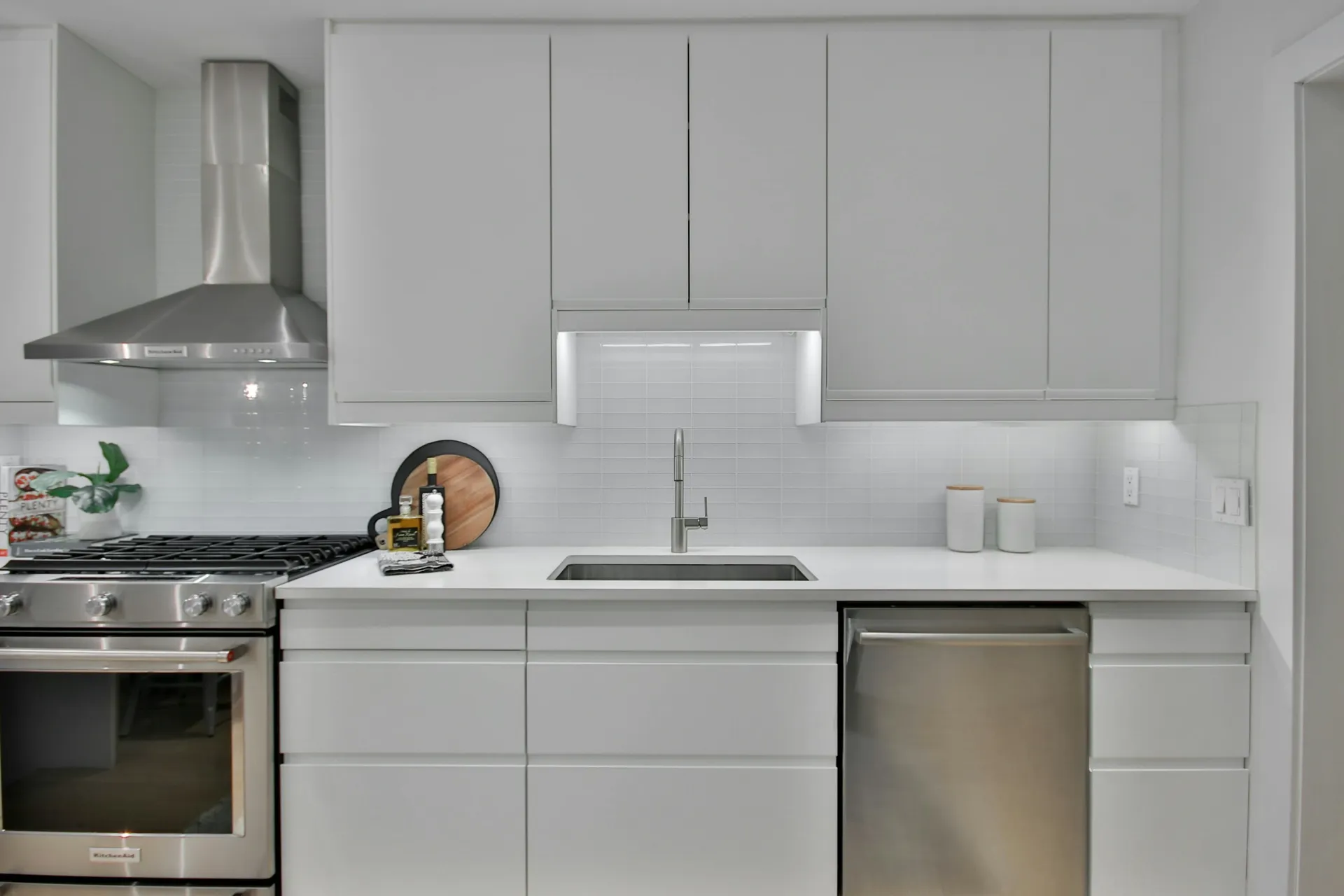
Short answer: a non-porous countertop, a backsplash with few or no grout lines, and matte, fingerprint-resistant cabinet doors keep most kitchen cleaning to a quick wipe. Marble, solid timber and high-gloss doors are lovely but ask for more care, so put them where you will enjoy them, not where you fry every night.
Countertop
Quartz, sintered stone and compact laminate are non-porous and need no sealing, which is why so many Singapore kitchens use them. Each has a limit: quartz dislikes hot pots, sintered stone can chip at the edges, and compact laminate shows a dark core at the edge. Granite needs periodic sealing; marble and solid timber need the most care. A softly veined or speckled pattern hides crumbs and water marks better than solid black or plain white. Compare them on countertops or in quartz vs sintered stone. An undermount sink lets you wipe the counter straight into the bowl (sinks and taps).
Backsplash
The wall behind the hob takes the most oil. A slab of the countertop material, or large tiles, leaves few or no joints to scrub. Subway, mosaic and patterned tiles add character and more grout; if you love them, pair them with epoxy grout.
Cabinet doors and handles
- Easier: high-pressure laminate and anti-fingerprint super-matte laminate wipe clean and hide touch marks.
- More upkeep: high-gloss acrylic and gloss paint show every fingerprint, veneer and solid wood dislike water near the sink, and clear glass doors show grease near the hob.
- Handles or handleless? Handleless looks calm, but push-to-open doors collect fingerprints where you press, and recessed finger grooves can trap crumbs and grease. Simple bar handles keep fingers off the door and are easy to wipe. Choose the cleaning job that bothers you less.
An induction hob's flat glass top is easier to wipe than gas burners and grates, and every hood has filters that need regular cleaning (hobs and hoods). For door finishes, see kitchen cabinets and carpentry finishes; for layout, our kitchen design guide.
Bathroom
How do I make a bathroom easier to clean?
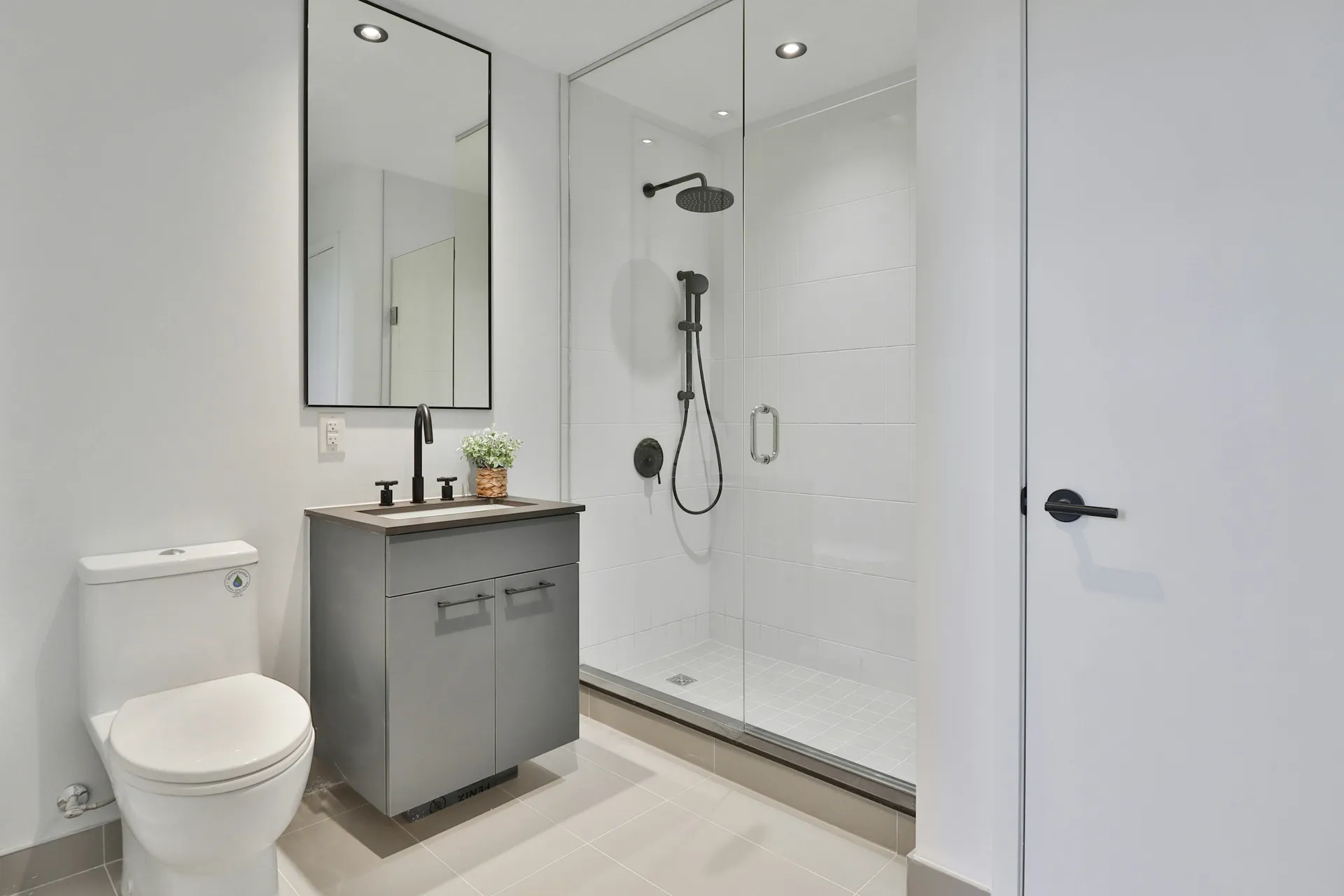
Short answer: fewer joints, fewer ledges and less on the floor. Large wall tiles, epoxy grout in the shower, a wall-hung vanity, a one-piece or wall-hung toilet, a fixed or frameless glass screen and a quick squeegee after showers do more for a clean bathroom than any cleaning product.
Walls and floor
Large wall tiles mean fewer grout lines. On the floor it is a balance: Houzz Singapore's tile advice is that the smaller the space, the smaller the tiles should be, and it suggests a neutral, non-acidic detergent for daily cleaning (Houzz). Textured anti-slip floor tiles are safer when wet; give them a brush now and then, because a mop glides over the texture.
Shower screen
- Easier: a fixed walk-in panel or frameless glass has no frame channels to trap grime. Squeegee it after the last shower of the day and water marks barely build up.
- More upkeep: framed screens and sliding tracks collect grime and mould, fluted glass traps soap scum in its ridges (though it hides water marks better than clear glass), and shower curtains grow mould in a humid bathroom.
See shower screens for every option.
Toilet, basin and vanity
- A one-piece toilet has fewer dirt traps than a two-piece. A wall-hung toilet leaves the floor clear for mopping, but it needs a concealed cistern and carrier frame and is hard to do in a new BTO during the three-year period (sanitaryware).
- A wall-hung vanity lets you mop underneath. An undermount or integrated basin wipes clean in one sweep; a vessel basin looks striking but adds a gap to clean around (bathroom vanities).
- A mirror cabinet keeps bottles off the counter, which is the easiest way to keep a counter quick to wipe.
Taps and fittings
Polished finishes show water spots and fingerprints but wipe back to a shine; brushed and textured finishes hide scratches better. If you can, see the finish wet in a showroom before you choose, and keep all fittings in one finish so replacements match later. For layout ideas, see our bathroom design guide.
Windows and fabrics
Which curtains, blinds, sofas and rugs are easiest to care for?
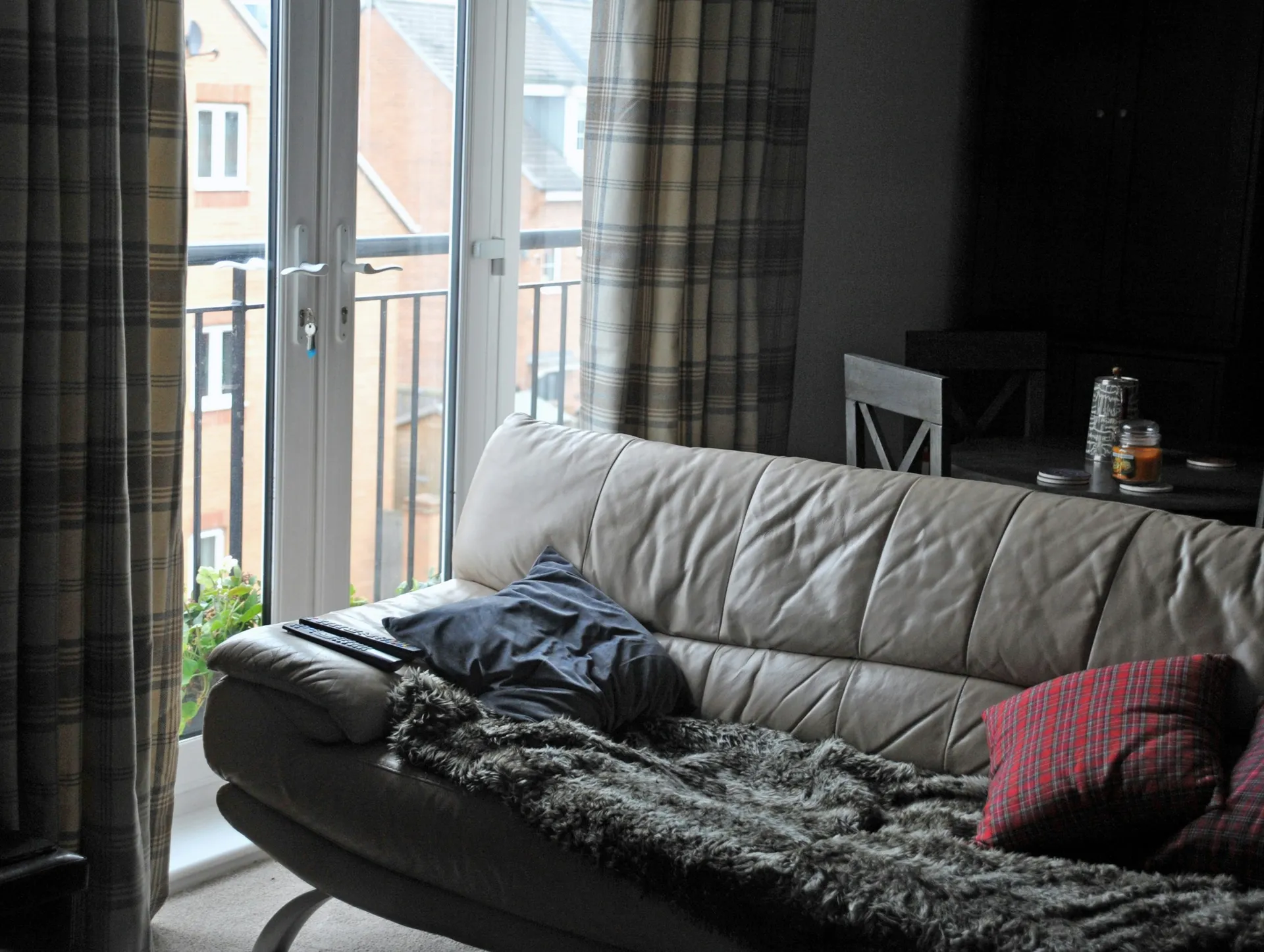
Short answer: in a humid climate the easiest soft furnishings are smooth, wipeable or washable: roller or zebra blinds, curtains you can take down and machine-wash, a tightly woven performance fabric or coated leather sofa, and flat-weave or washable rugs. Loose, thick or dry-clean-only fabrics hold more dust and take more effort.
The American Lung Association lists bedding, mattresses, upholstered furniture, carpets and curtains as places dust mites live, and suggests hard flooring instead of carpet for people allergic to them (ALA). If anyone at home has a dust allergy, lean harder towards smooth and washable.
Windows and window treatments
- Easier: roller and zebra blinds wipe down, and curtains on removable hooks go straight into the washing machine. Check the care label before you order.
- More upkeep: Venetian slats need dusting one by one, honeycomb blinds collect dust inside their cells, and heavy lined drapes are hard to wash at home.
- Sliding window tracks collect dust and rainwater; a small brush every few weeks keeps them running.
See window treatments and curtains vs blinds.
Sofas
Performance fabrics and top-grain or corrected-grain leather wipe clean and suit busy homes, and removable, washable covers help a lot with children. Linen stains easily, boucle snags and holds fur, and bonded leather and cheap PU can peel in humid weather. A sofa on legs lets a vacuum reach underneath; a skirted base hides the gap, and the dust in it. See sofas.
Rugs
Flat-weave and low-pile rugs give up dust and crumbs more easily than shag or deep pile, and a rug small enough for the washing machine is the easy-care choice. Under a dining table, a flat weave or no rug at all saves you picking rice out of the pile.
At a glance
Which surfaces are easier to keep clean?
General guidance, not a ranking. Each "more upkeep" choice can still be right for you if you value what it gives back.
| Easier to keep clean | Takes more upkeep | The trade-off | |
|---|---|---|---|
| Floors | Matte or textured porcelain tiles, SPC vinyl | Marble, solid timber, polished tiles, plain very light or very dark colours | Stone and timber feel special but need sealing or refinishing |
| Grout | Few, narrow joints; epoxy grout in wet areas | Small tiles and mosaics with light cement grout | Epoxy costs more and needs a skilled tiler |
| Wall paint | Washable matte, eggshell or satin | Flat paint on walls, limewash, rough textures | Higher sheens wipe better but show wall flaws |
| Ceilings and lights | Flat ceiling, flush downlights, smooth shades | Open coves, layered ceilings, fabric or rattan shades | Coves give the softest light but gather dust |
| Countertop | Quartz, sintered stone, compact laminate | Marble, solid timber, granite that needs sealing | Natural materials age with character; engineered ones stay the same |
| Backsplash | Countertop slab or large tiles | Mosaics and small patterned tiles | Small tiles add character and more grout |
| Cabinet doors | Anti-fingerprint matte laminate, HPL | High-gloss acrylic, gloss paint, veneer near the sink | Gloss brightens a small kitchen but shows every touch |
| Shower screen | Fixed panel or frameless clear glass, squeegeed | Framed screens with tracks, fluted glass, curtains | Frameless costs more; framed costs less but traps grime |
| Toilet and vanity | One-piece or wall-hung toilet, wall-hung vanity | Two-piece toilet, vanity standing on the floor | Wall-hung needs more plumbing work and a strong wall |
| Window treatments | Roller and zebra blinds, washable curtains | Venetian and honeycomb blinds, heavy drapes | Blinds are tidier; curtains feel softer and can be washed |
| Sofa | Performance fabric, coated leather, washable covers | Linen, boucle, bonded leather, cheap PU | The cosiest textures are often the hardest to keep clean |
| Rugs | Flat-weave, low pile, washable | Shag, deep pile, large rugs | Thick rugs feel luxurious and hold more dust |
Your household
What should I choose if I have no helper, young kids, pets or a busy kitchen?
Short answer: match each surface to whoever makes the most mess and whoever does the cleaning. The same sofa can be a great choice in one home and a constant chore in another, so plan for the next five years of your household, not the photo.
No helper, both of you working
Aim for fewer things to clean before tougher things to clean: fewer open shelves and coves, cabinets that close up to the ceiling, and built-ins that sit flush to the floor so nothing collects underneath. Closed storage hides clutter you would otherwise dust. A built-in platform bed leaves no gap below (beds and platforms).
Young children
Lean towards washable paint at child height, wipeable sofas or washable covers, rounded edges, and floors that are easy to mop. Our child-friendly home design post covers safety and layout, and the kids' room guide covers the room itself.
Pets
Think scratch-resistant floors, tightly woven or technical fabrics, and colours close to your pet's fur. For layout, litter and feeding spots, see pet-friendly home design.
Heavy cooking
Put the effort into the cooking zone: a heat-tolerant countertop, a slab or large-tile backsplash with epoxy grout, a hood strong enough for your cooking with filters you can reach, and water-resistant carcasses at the sink. Keep veneer and gloss away from the hob. A kitchen you can close off keeps oil off living room fabrics; see open concept kitchens in HDB flats.
Renting out
Tenants rarely clean as carefully as owners, and every repair costs you time. Lean towards durable, neutral, easy-to-replace finishes: tiles or SPC vinyl, laminate carpentry, a quartz or compact laminate top, roller blinds and common fittings with easy-to-find parts. See renovating an HDB flat for rental.
Budget
Is it worth paying more for low-maintenance finishes?
Short answer: often yes where you clean every day, and often not where you rarely touch. Spending more on the shower, the backsplash, the countertop and the sofa buys back time every week; spending more on a guest room feature wall rarely does.
- Upgrades that tend to repay you: epoxy grout in wet areas, a wall-hung vanity, a one-piece toilet, a frameless or fixed screen, anti-fingerprint laminate on high-touch doors, and closed storage instead of open shelves.
- Where standard is often fine: ordinary paint in bedrooms, cement grout on dry floors, standard laminate inside wardrobes.
- Where low maintenance costs less: leaving things out. Fewer coves, feature walls, open shelves and fittings are cheaper and quicker to clean.
Even easy-care finishes wear, so ask your contractor how each is repaired; see sagging cabinet doors and peeling laminate for what humidity does to carpentry, and where to save on renovation for where money matters most.
FAQs
Questions homeowners ask about low-maintenance materials
Is it worth choosing low-maintenance materials if I have a helper?
Usually, yes. Easy-care finishes save time whoever cleans, they stay looking newer for longer, and they make life simpler if your household changes.
What is the most low-maintenance flooring for an HDB flat?
Matte porcelain tiles and SPC vinyl are the common easy-care choices. Tiles handle water better, while vinyl has no grout and can go over existing tiles, so the right one depends on the room and whether you want to hack.
Are light or dark finishes easier to keep clean?
Neither extreme. Very light surfaces show stains and hair, and very dark ones show dust and water marks. Mid-tones with a little pattern or grain are the most forgiving.
Does anti-mould paint stop mould?
It slows mould on the paint surface, but it cannot fix a leak, a damp wall or a room without airflow. Sort out the moisture first, then use anti-mould paint as a second line of defence.
How do I keep a glass shower screen clean?
A rubber squeegee after the last shower of the day removes most of the water before it dries into marks. A screen without frames or tracks leaves fewer places for soap scum and mould to build up.
What if my home already has high-maintenance finishes?
You rarely need to rip them out. Seal porous stone and grout, add washable covers, mats and closed storage, and swap the worst offenders, such as old blinds or a shower curtain, one at a time.
Plan it before you build it
See your finishes together before you commit
It is easier to choose easy-care finishes when you can see the whole home first. JIAHOME designs your home for a fixed fee, with mood boards, 2D layouts and up to 10 3D views, plus a quotation that lists every item without prices, so any contractor can price the same scope. Your first consultation is free.
Important
Disclaimer and sources
This guide is general information to help homeowners plan. It is not professional, health or legal advice, and there is no single right material for every home: how a finish wears depends on the product, the installation and how it is used and cleaned. Check product care instructions with your supplier, and current rules with HDB, your MCST and your contractor. Rules and climate figures were checked in November 2026.