Design ideas
Quartz vs sintered stone countertops: which suits your Singapore kitchen?
Choose quartz if you want a forgiving, repairable worktop at a lower price; choose sintered stone if heat, sunlight or a slim profile matters more and you can live with careful edges.
 Rayden Nyoe4 min read
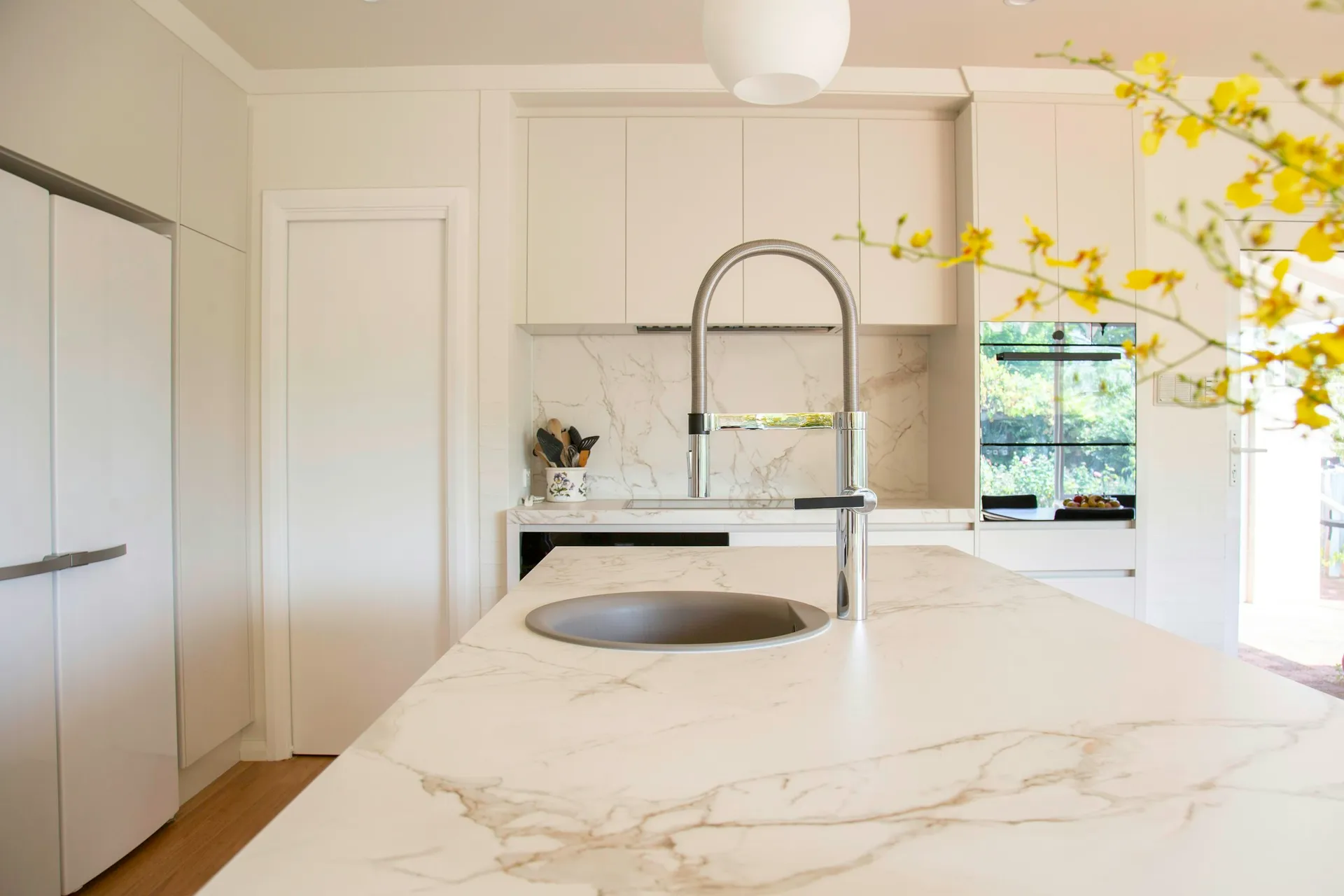
Short answer: quartz is the forgiving, usually cheaper choice: its resin binder makes it less prone to chipping and easier to repair, but it needs protection from hot pans and strong sun. Sintered stone has no resin, so it handles heat and sunlight better, but it is more brittle at the edges, harder to repair and usually costs more. If you cook hard with heavy pots and want peace of mind, quartz is often the safer pick. If your counter sits in sunlight or you want a slim, heat-tolerant surface, sintered stone earns its premium.
This post focuses on the decision between the two. For every countertop option, including solid surface, granite, compact laminate and stainless steel, see our countertops guide.
What each material actually is
Quartz (engineered quartz) is crushed natural quartz bound with resin and coloured with pigments. Qanvast describes it as natural quartz combined with pigments and resin binders. The resin is the key to both its strengths and its weaknesses.
Sintered stone is made from natural minerals such as quartz, feldspar and silica, pressed and fired at very high temperatures so the particles fuse without melting. Furniture retailer Castlery describes it as containing no resins or polymer binders and being non-porous.
How they compare, point by point
Heat
- Quartz: the resin can be damaged by high heat. One quartz manufacturer, Caesarstone, says its surfaces are heat resistant but advises against placing very hot pots, pans and oven trays (above about 150°C) directly on them, recommends a hot pad or trivet, and warns that sudden temperature changes can cause damage.
- Sintered stone: with no resin, it tolerates heat far better. A 2022 Qanvast article (a paid partnership with a supplier) claims up to 300°C for sintered stone versus about 100°C for quartz. Treat these as marketing figures, but the direction is consistent across sources.
Chipping and repairs
- Quartz: homeowners and suppliers report that the resin makes quartz more chip resistant, and that small chips and cracks can be repaired without obvious lines. Quartz slabs are also typically full-bodied, so the pattern runs through the slab.
- Sintered stone: harder on the surface but more brittle. One Singapore homeowner's account notes it is more prone to chipping, and that a chip is hard to fix without visible marks because the inside may not match the printed surface. Edges and corners are the weak points.
Scratches and stains
Both are low maintenance and neither needs sealing. Qanvast describes both as stain resistant. For daily cleaning, Caesarstone recommends a damp cloth and mild detergent and advises against abrasive sponges, which is sensible for both materials.
Sunlight
A Singapore homeowner account reports that quartz can yellow over time, faster in direct sunlight, which matters for very white quartz near windows. Sintered stone's colour comes from minerals, and retailers present it as UV resistant and suitable outdoors.
Thickness and look
Homeowner reports put quartz typically around 20mm and sintered stone around 12mm, with thicker sintered slabs costing and weighing more. Sintered stone suits a slim, minimal edge. Quartz offers a solid, chunky edge and a wide range of plain and stone-look colours.
What about cost?
Prices vary by brand, series and thickness, so these figures are indicative only:
- Qanvast's 2022 article quoted quartz from about $100 per foot run and sintered stone from about $250 per foot run.
- One Singapore homeowner reported in 2025 that upgrading from quartz to sintered stone added about $50 per foot run in their interior designer's quote.
The general pattern is consistent: sintered stone usually costs more than mid-range quartz, but premium quartz colours can overlap with entry-level sintered stone. Ask for the brand, series, thickness and edge profile in writing, because these drive the price. Our kitchen renovation cost guide shows how the worktop fits into the wider kitchen budget.
A quick way to decide
Choose quartz if:
- you want the lower cost for the same length of counter;
- your household is busy and things get dropped;
- you want chips to be repairable without much trace;
- you are happy to use trivets for hot pans.
Choose sintered stone if:
- you often put hot pots down without thinking;
- the counter, island or table gets direct sun;
- you want a thin, sleek profile or a very realistic stone look;
- you are prepared for careful edges and a higher price.
Mixing both
Some homeowners use quartz for the main working counter and sintered stone for a sunlit island or dining table, or the reverse. The two can sit well together if you match the tones.
Questions to ask your fabricator
- What brand and series is this, and what thickness?
- What edge profile do you recommend to reduce chipping?
- How are cut-outs for the sink and hob reinforced?
- Can chips be repaired, and how visible will the repair be?
- What does the warranty cover, and does it exclude heat damage?
- Is the quoted price per foot run, and does it include backsplash and cut-outs?
Where this fits in your kitchen design
The worktop is the surface you touch every day, so it is a good place to spend. Pair it with the right cabinets and sink: see kitchen cabinets and kitchen sinks and taps. Planning an open kitchen with an island? Read our guide to the open concept kitchen in HDB flats.
How JIAHOME helps
We specify your worktop by material, thickness and edge in the design, then give you a quotation without prices so you can compare like for like. See packages.
FAQ
Frequently asked questions
Which is more heat resistant, quartz or sintered stone?
Sintered stone, because it contains no resin. Quartz manufacturers such as Caesarstone advise using a trivet or hot pad rather than placing very hot pans directly on the surface.
Does sintered stone chip easily?
It is hard on the surface but more brittle than quartz, so edges and corners can chip if knocked. Chips are harder to repair invisibly than on quartz, so ask your fabricator about edge profiles.
Is sintered stone more expensive than quartz?
Usually. A 2022 Qanvast article quoted quartz from about $100 and sintered stone from about $250 per foot run, though premium quartz can overlap with entry-level sintered stone. Prices are indicative.
Will a white quartz countertop turn yellow?
Some homeowners report yellowing over time, faster in direct sunlight, because of the resin. If your counter gets strong sun, consider sintered stone or a warmer colour.
Find your style