Design ideas
Japandi interior design: how to get the look in a Singapore home
Japandi blends Japanese and Scandinavian design: a restrained neutral palette, natural materials, low clean-lined furniture and very little clutter. In a Singapore home it works best with wood-look floors, hidden storage and warm lighting.
 Rayden Nyoe4 min read
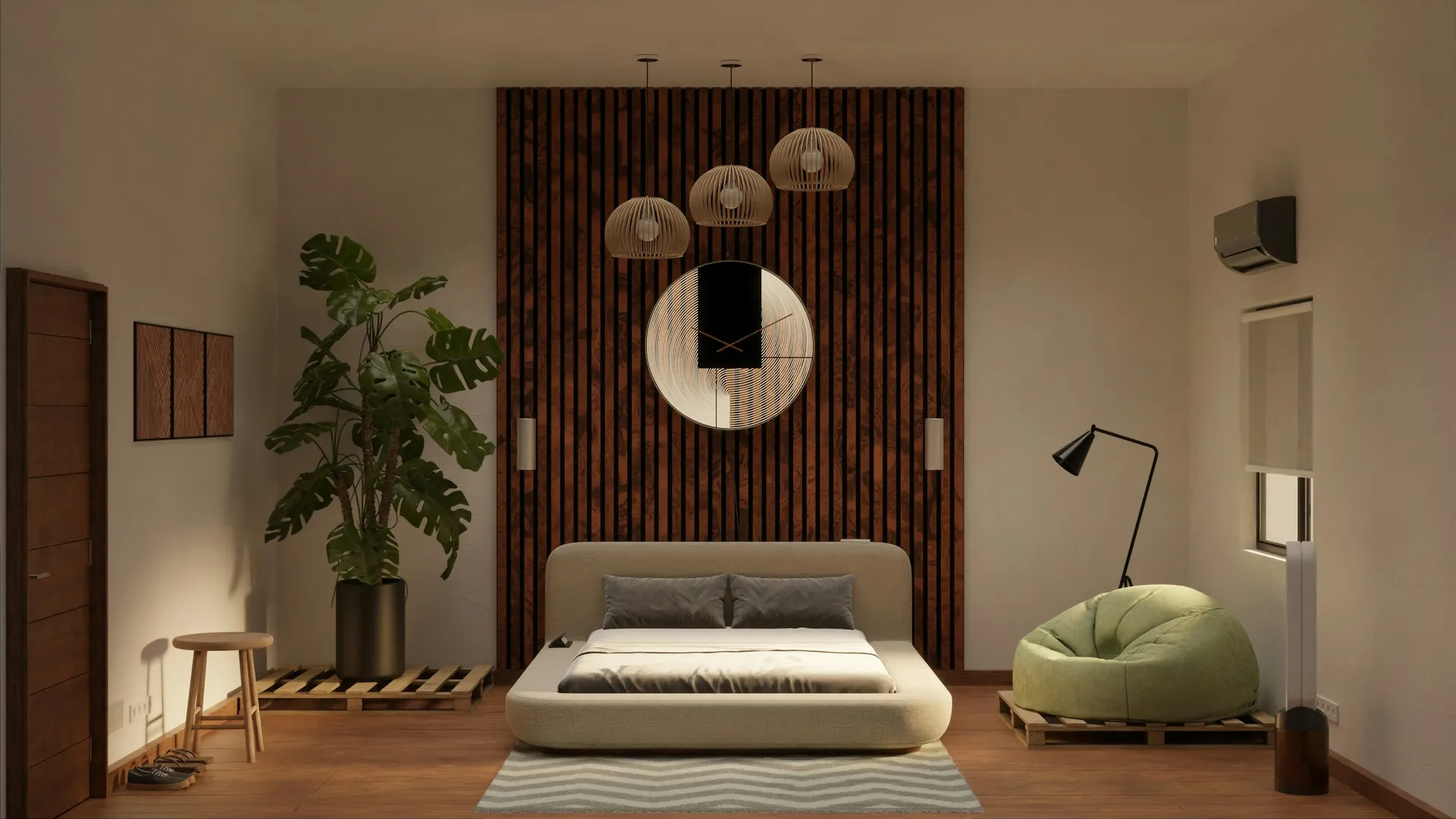
Short answer: Japandi is an interior style that blends Japanese and Scandinavian design. Expect a restrained palette of off-white, beige and soft grey, natural materials like wood, stone, paper and bamboo, low furniture with clean lines, warm indirect lighting and very little clutter. In a Singapore flat, the look depends less on buying "Japandi" pieces and more on storage, materials and light.
What Japandi actually is
The name joins "Japan" and "Scandi". According to Wikipedia's overview, the term emerged around 2016, although Japanese and Scandinavian design had influenced each other well before that, in ceramics, architecture and Danish furniture. The style draws on two ideas:
- Wabi-sabi (Japanese): finding beauty in simplicity, natural materials and imperfection.
- Hygge (Danish): comfort, warmth and cosiness at home.
Put together, you get rooms that are calm and pared back like a Japanese interior, but softer and more lived-in than strict minimalism.
The key ingredients
- Palette: walls in off-white, beige or soft grey, with darker accents in charcoal, black or deep wood.
- Materials: wood, natural stone, paper, bamboo, linen and ceramics.
- Furniture: low, simple and well made, such as a low bed, a low sofa or a floor-level coffee table.
- Screens and dividers: shoji-inspired panels or slatted screens that divide space without blocking light.
- Lighting: warm and indirect, such as paper lamps, cove lighting and table lamps.
- Styling: fewer things, chosen carefully. A branch in a vase, a stack of books, one ceramic piece.
If you lean more to one side, explore our Japanese interiors and Scandinavian interiors concepts. For a related, very practical take, see Muji home.
Bringing Japandi into an HDB flat or condo
Floors
Wood tones carry the style. In an HDB flat, laying vinyl over existing tiles needs no permit, and HDB allows laminated, parquet or timber flooring over existing finishes as long as it does not involve raising the floor as a platform, using cement screed, or hacking the existing finish. Our post on vinyl flooring vs tiles compares the options, and the flooring guide covers the full range.
Low beds and platforms
A low bed or platform is very Japandi. If you build a hardwood platform, HDB's guidelines recommend a room height of at least 2.4 metres, require the platform sides to be sealed, do not allow storage in the void within the platform, and require at least 1 metre of safety barrier height from the top of the platform to the window sill or parapet. Check those numbers before you design. See our beds and platforms guide.
Screens and partitions
A slatted screen or sliding panel can separate a study or entrance without closing it off. HDB allows gypsum partitions, 63mm hollow block walls and 80mm glass block walls without a permit, subject to conditions: rooms for habitation need adequate natural light and ventilation, and the fire escape route should be direct and should not pass through another room. Our doors and gates guide covers sliding door options.
Storage that disappears
Japandi only works without clutter. Full-height, flat-fronted cabinets in a light wood or matt finish make storage read as a calm wall. Use handleless doors or simple pulls. See our wardrobes and carpentry finishes guides, and our carpentry cost guide for budgeting.
Lighting
Warm white light suits the style. ENERGY STAR describes roughly 2200K to 3000K as soft or warm white, ideal for most indoor applications. Layer cove lighting with paper or fabric lamps. Our home lighting design guide explains how to plan it.
Textiles and plants
Linen curtains or simple blinds, a wool or jute rug, cushions in muted colours, and one or two large plants rather than many small ones. See window treatments for curtain and blind options.
Designing for Singapore's climate
The Meteorological Service Singapore records a mean annual relative humidity of around 82%, with daily maximum temperatures of 31 to 33 degrees Celsius. That affects material choices:
- Wood: solid timber moves with humidity. Many homeowners use wood-look laminate on carpentry and wood-look vinyl on floors, saving real timber for furniture.
- Natural fibres: rattan, linen and jute are lovely but need airflow. Avoid pushing them into closed, damp corners.
- Thick textiles: chunky knit throws and heavy wool are more decorative than practical here. Lighter linen and cotton give the same calm look.
Japandi vs minimalist vs Muji
- Minimalist: the fewest possible things, often with cooler colours. See minimalist interiors.
- Muji: light wood, white and practical storage, very close to Japandi but more functional and less styled.
- Japandi: minimal, but with warmer textures, darker accents and more craft.
Common Japandi mistakes
- Too much beige. Without darker accents, rooms look flat. Add charcoal, black or deep wood.
- Too many wood tones. Pick two or three that work together.
- Decorating before decluttering. Storage comes first.
- Cool white lighting. It kills the warmth the style depends on.
- Buying a "Japandi set". The look comes from restraint and materials, not matching pieces.
How JIAHOME helps
We build mood boards around your style, then turn them into 2D layouts and up to 10 3D views, so you can see a Japandi home before committing. You can take the design to any contractor. See our services or browse our design concepts.
FAQ
Frequently asked questions
What is Japandi interior design?
Japandi is a style that blends Japanese and Scandinavian design: a restrained neutral palette, natural materials, low clean-lined furniture, warm lighting and very little clutter. The term emerged around 2016.
Is Japandi suitable for an HDB flat?
Yes. Its emphasis on hidden storage, light colours and simple furniture suits compact flats well. Check HDB rules for platforms and partitions before building them.
What colours are used in Japandi interiors?
Mostly off-white, beige and soft grey on walls, with natural wood tones and darker accents such as charcoal or black for contrast.
Can I build a low platform bed in my HDB bedroom?
HDB allows hardwood platforms without a permit, subject to conditions: a recommended room height of at least 2.4 metres, sealed sides, no storage in the void, and at least 1 metre safety barrier height from the platform top to the window sill.
Find your style